The advancement of aesthetic dermatology has introduced various modalities for managing skin health and addressing common dermatological concerns. Among these modalities, energy-based skin treatments have evolved significantly over the years. One notable development in this field is the introduction of picosecond laser technology. Widely utilized in medical aesthetics, picosecond lasers represent a distinct approach to interacting with skin tissue, utilizing ultra-short pulses of energy to address a variety of concerns, ranging from unwanted pigmentation to textural irregularities.
Understanding how this technology works, its applications, and its limitations is an important part of making informed decisions regarding personal skin care and aesthetic treatments. The following sections provide an educational overview of picosecond laser technology, outlining the underlying science, typical uses, expected treatment processes, and safety considerations.
To appreciate the role of picosecond lasers in dermatology, it is helpful to understand the basic principles of laser chronobiology and tissue interaction. The term “picosecond” refers to a unit of time—specifically, one-trillionth of a second. This ultra-short pulse duration differentiates picosecond lasers from older laser technologies, which typically operate in the nanosecond (one-billionth of a second) or millisecond (one-thousandth of a second) ranges.
How Picosecond Pulses Work
In any laser treatment, energy is delivered to the skin and absorbed by specific targets, known as chromophores. In the context of skin aesthetics, the primary chromophores are melanin (the pigment responsible for skin color), hemoglobin (found in blood vessels), and water. When treating pigmentation or tattoos, the laser is calibrated to target melanin or tattoo ink.
Because picosecond lasers deliver their energy in an extraordinarily brief window of time, the energy interacts with the targeted chromophore very rapidly. This rapid delivery means that the targeted pigment or ink absorbs the energy extremely quickly. The ultra-short pulse duration aims to minimize the amount of time that heat has to spread to surrounding, non-targeted tissue, which is a key factor in the safety profile of the treatment.
The Photoacoustic Effect
Traditional nanosecond lasers rely heavily on a photothermal effect, meaning they primarily generate heat to break down their target. While effective, this localized heat can sometimes lead to thermal damage in the surrounding skin, increasing the risk of adverse effects, particularly in individuals with darker skin tones.
Picosecond lasers, by contrast, utilize a phenomenon known predominantly as the photoacoustic or photomechanical effect. Because the energy pulse is so brief, it creates a rapid mechanical shockwave within the targeted pigment. This acoustic wave shatters the pigment particles or tattoo ink into extremely fine, dust-like fragments. Once the pigment is reduced to these minuscule particles, the body’s immune system—specifically, scavenger cells called macrophages—can more readily absorb and naturally eliminate them over time. This targeted shattering effect, achieved with less reliance on high heat, is one of the distinguishing characteristics of picosecond technology.
Pico lasers have gained popularity for their ability to treat various skin concerns, including pigmentation, acne scars, and overall skin rejuvenation. By delivering ultra-short pulses of energy, pico lasers stimulate collagen production and promote skin healing without causing significant damage to the surrounding tissue. For those interested in exploring additional methods to enhance skin firmness and address sagging, you may find valuable insights in this related article on natural face-lifting techniques. You can read more about it here: Sagging Skin Issues: How to Lift and Firm Your Face Naturally.
Common Dermatological Applications of Pico Lasers
Within a clinical setting, healthcare professionals may utilize picosecond lasers to manage a variety of skin conditions. Because lasers can often be equipped with different wavelengths and handpieces, they can be adapted to target different depths and types of tissue concerns. It is important to note that results vary between individuals, and multiple sessions are usually required to achieve a noticeable outcome.
Addressing Pigmentation Concerns
Hyperpigmentation occurs when there is an overproduction of melanin in specific areas of the skin, leading to patches that appear darker than the surrounding natural skin tone. Conditions such as melasma, solar lentigines (sun spots), freckles, and post-inflammatory hyperpigmentation (dark marks left after acne or injury) are common concerns.
By directing picosecond laser energy at these excess melanin deposits, the photomechanical effect helps to shatter the pigment clusters. Consequently, the treatment may help reduce the appearance of uneven skin tone and lighten dark spots. It is crucial to understand that pigmentation conditions, particularly melasma, are complex and chronic. While laser treatments can be part of an effective management plan, they are not a permanent cure. Hormonal fluctuations, ultraviolet (UV) exposure, and genetic predispositions can cause pigmentation to return, necessitating ongoing maintenance and rigorous sun protection.
Managing Acne Scars and Skin Texture
Beyond treating pigment, picosecond lasers are also utilized for skin revitalization and the management of atrophic acne scars (depressed scars). This is typically achieved using specialized fractionated handpieces. These handpieces fractionate, or split, the main laser beam into a grid-like pattern of microscopic, highly concentrated energy columns.
When these micro-beams enter the skin, they create microscopic areas of controlled tissue injury within the deeper layers of the skin (the dermis), a process sometimes referred to as Laser-Induced Optical Breakdown (LIOB). Importantly, this process is designed to leave the outermost layer of the skin (the epidermis) largely intact. The localized, microscopic damage in the dermis triggers the body’s natural wound-healing response. As the skin repairs itself, this process may stimulate the production of new collagen and elastin fibers—two essential structural proteins that provide the skin with firmness and elasticity. Over successive treatments, this collagen-stimulating process may help improve the appearance of depressed acne scars, reduce the visibility of enlarged pores, and promote a smoother overall skin texture.
Tattoo Removal Considerations
Tattoo removal was one of the earliest primary applications for ultra-short pulse lasers. Different tattoo inks reside at varying depths within the skin and consist of different chemical compounds, which require specific laser wavelengths for effective absorption.
The photoacoustic shattering effect of picosecond pulses is particularly adept at breaking down dense tattoo ink particles. Because the acoustic wave fragments the ink into smaller pieces compared to traditional photothermal lasers, the body may clear the ink more efficiently. However, completely removing a tattoo remains a complex and lengthy process. The degree of clearance depends on numerous factors, including the age of the tattoo, the colors used (darker colors typically respond differently than lighter, brighter colors like yellow or light blue), the depth of the ink placement, and the individual’s immune system response. Complete removal is never guaranteed, and residual “ghosting” or faint outlines may persist.
The Treatment Process: What to Expect
Undergoing any medical aesthetic procedure requires careful consideration and preparation. A patient’s experience with a picosecond laser treatment involves several distinct stages, beginning well before the actual application of the laser device.
Initial Consultation and Assessment
The most critical step in an energy-based skin treatment is a thorough consultation with a qualified medical professional. During this session, the practitioner will review the patient’s medical history, current medications, lifestyle, and aesthetic goals.
The practitioner will also assess the patient’s skin type using the Fitzpatrick scale, which categorizes skin based on its reaction to UV light and its inherent melanin content. This assessment is vital for determining the appropriate laser settings, as different skin types carry different risk profiles for adverse reactions. The consultation also serves to establish realistic expectations, ensuring the patient understands that results are not immediate and that gradual improvement over a series of treatments is the standard clinical pathway.
During the Procedure
On the day of the treatment, the skin is thoroughly cleansed. Depending on the intensity of the specific laser settings being used and the individual patient’s pain tolerance, a topical anesthetic cream may be applied to the treatment area to optimize comfort. The numbing process typically takes between 30 to 45 minutes to take full effect.
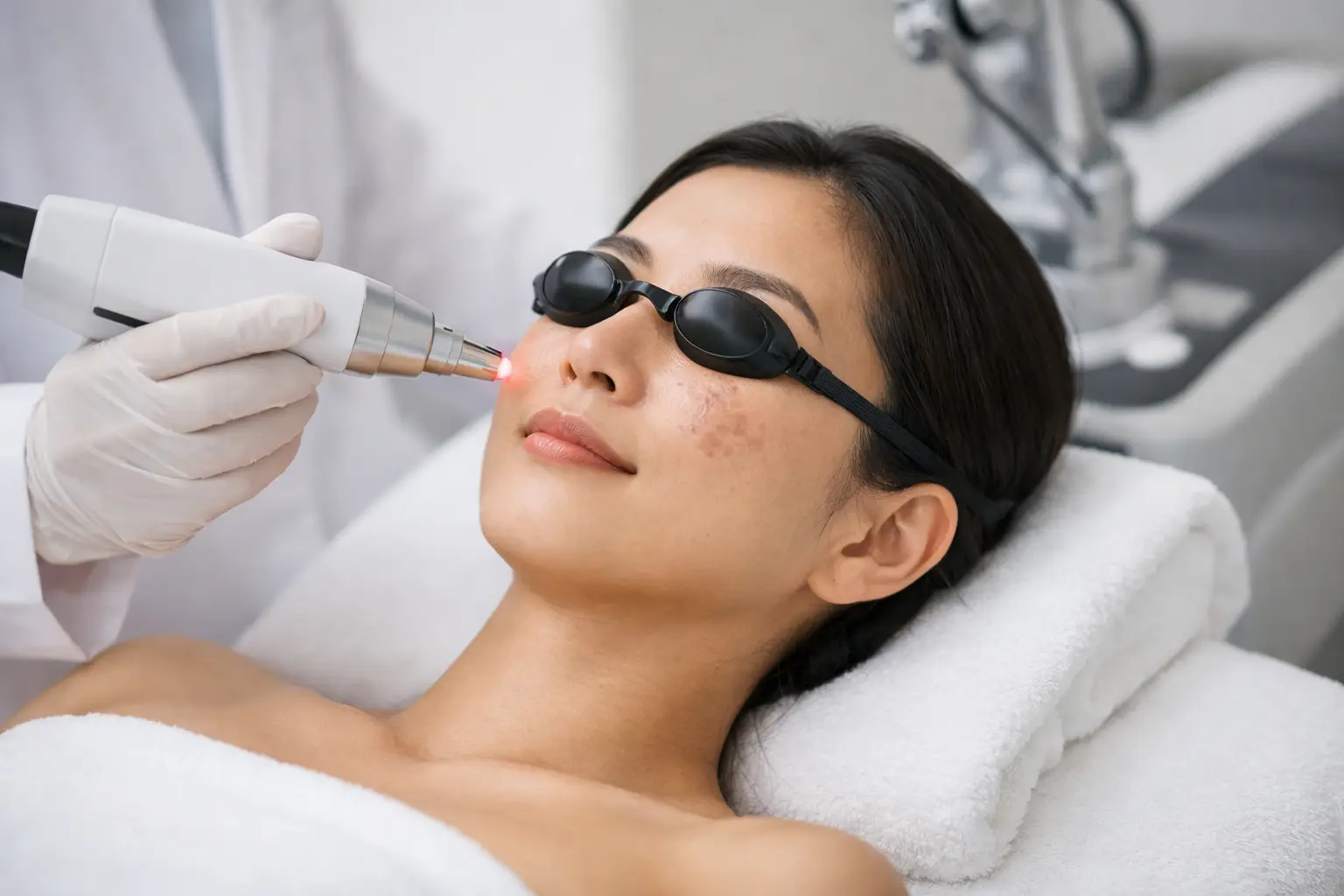
During the procedure, both the patient and the practitioner must wear protective eyewear to shield against accidental laser exposure. As the laser handpiece is guided across the skin, patients often report experiencing a sensation similar to brief, rapid snapping of a rubber band against the skin, accompanied by a mild warming feeling. The duration of the actual laser application varies depending on the size of the area being treated but generally falls between 15 to 30 minutes for a full face treatment.
Post-Treatment Care
Proper aftercare is essential to facilitate the healing process and minimize the risk of complications. Following a picosecond laser session, the treated skin is often sensitive and compromised. Patients are typically advised to use gentle, fragrance-free cleansers and to apply heavy, soothing moisturizers to support the skin’s barrier function.
Active skincare ingredients that may irritate the skin, such as alpha-hydroxy acids (AHAs), beta-hydroxy acids (BHAs), retinoids, and physical exfoliants, must be avoided for at least several days to a week, or as instructed by the clinician. The most crucial aspect of post-care is strict sun avoidance. The treated skin is highly susceptible to UV damage, which can lead to post-inflammatory hyperpigmentation. Diligent application of a broad-spectrum sunscreen with a high SPF, along with physical barriers like hats and umbrellas, is non-negotiable in the weeks following the procedure.
Safety, Risks, and Potential Side Effects
While picosecond laser technology is generally considered to have a favorable safety profile compared to older, more heat-intensive modalities, it is unequivocally a medical procedure that carries inherent risks. A comprehensive understanding of these potential side effects is necessary for making an informed choice.
Common and Temporary Side Effects
Expected responses immediately following a picosecond laser treatment typically include mild to moderate erythema (redness) and edema (swelling), similar in appearance to a mild sunburn. The treated area may feel warm, tight, or slightly tender. These symptoms generally subside within a few hours to a few days, depending on the aggressiveness of the treatment settings.
In cases where specific pigmentation lesions or tattoos are treated, the targeted spots may temporarily darken, and superficial crusting or micro-scabbing may develop. It is vital that patients allow these crusts to slough off naturally; picking or scratching at the skin can disrupt the healing process, increase the risk of infection, and potentially lead to permanent scarring.
Minimizing Complications
More significant side effects, while less common, can occur. The most prominent concern, particularly in individuals with higher Fitzpatrick skin types (darker skin tones), is Post-Inflammatory Hyperpigmentation (PIH). PIH occurs when the trauma from the laser energy stimulates melanocytes to produce excess melanin as a defense mechanism, resulting in new dark patches on the skin.
Conversely, hypopigmentation (a localized loss of skin color) may also occur if melanocytes are inadvertently damaged. Other rare complications include prolonged redness, blistering, infection, and in very severe cases, permanent scarring. To mitigate these risks, it is imperative that the treatment is performed by a trained and experienced healthcare provider who can appropriately calibrate the device parameters—such as wavelength, fluence (energy level), and spot size—to align with the individual’s unique dermal profile.
Pico lasers have gained popularity in the field of aesthetic treatments due to their ability to deliver energy in ultra-short pulses, effectively targeting pigmentation and skin imperfections without damaging surrounding tissue. For a deeper understanding of how our facial expression habits can influence the aging process of our skin, you might find this article insightful. It explores the connection between our daily expressions and skin health, which complements the benefits of pico laser treatments. You can read more about it here.
Patient Suitability and Individual Variations
| Aspect | Description |
|---|---|
| Technology | Pico laser uses ultra-short pulses of energy to target and break down pigmentation and tattoo ink. |
| Target | It targets specific colors in the skin or tattoo ink without damaging the surrounding skin. |
| Speed | The pulses of energy are delivered in trillionths of a second, making it faster and more efficient than traditional lasers. |
| Results | Pico laser can achieve significant improvement in pigmentation, tattoo removal, and skin rejuvenation with fewer treatments compared to traditional lasers. |
Medical aesthetic procedures are not universally applicable. A treatment that yields satisfactory results for one individual may not be suitable or effective for another. This principle holds true for picosecond laser therapies.
Who May Benefit
Picosecond lasers can be integrated into the treatment plans of individuals seeking to manage benign pigmented lesions, improve skin texture, address acne scarring, or remove tattoos. Because the technology relies comparatively less on photothermal heating, it is often viewed as a versatile option that can be carefully adapted for a variety of skin types, including those of Asian descent, which typically fall into Fitzpatrick types III to V. However, suitability can only be determined on a case-by-case basis through a professional clinical evaluation. Individuals must be prepared to commit to the recommended treatment protocol, which usually involves multiple sessions spaced out over several weeks or months.
Contraindications and Limitations
Certain medical conditions and medications render laser treatments unsafe. Women who are pregnant or breastfeeding are universally advised to postpone elective laser procedures. Individuals with active local or systemic infections, open wounds, or active cold sores (herpes simplex virus) in the treatment area must wait until the condition has fully resolved.
Furthermore, patients with a history of keloid scarring, poorly controlled diabetes, or autoimmune disorders involving the skin (such as lupus) may not be suitable candidates due to unpredictable wound healing and an increased risk of complications. The concurrent use of photosensitizing medications—most notably oral isotretinoin, which is commonly prescribed for severe acne—poses a significant risk for abnormal healing and scarring. Consequently, patients must usually discontinue such medications for an extended period, as determined by their physician, prior to undergoing laser therapy. Recent unprotected sun exposure or active tanning also constitutes a strict contraindication, as the presence of newly stimulated active melanin wildly increases the risk of thermal injury and PIH.
The landscape of energy-based skin treatments is continually advancing. Picosecond laser technology represents a refined approach to utilizing light and sound energy for dermatological applications. By shattering pigment and facilitating collagen remodeling through LIOB, it offers a sophisticated tool for medical practitioners to help patients manage skin texture and tone. Nevertheless, thorough consultation, adherence to pre- and post-treatment protocols, and professional execution remain the cornerstones of safe and responsible aesthetic care.
FAQs
What is a Pico laser?
A Pico laser is a type of laser technology that delivers ultra-short pulses of energy to the skin in picoseconds (trillionths of a second). It is used for various dermatological treatments, including tattoo removal, skin rejuvenation, and pigmentation correction.
How does Pico laser work?
Pico laser works by delivering ultra-short pulses of energy to the targeted area of the skin. These pulses are so fast that they create a photomechanical effect, which shatters the targeted pigment particles without causing damage to the surrounding skin. This allows for more effective and efficient treatment with minimal discomfort and downtime.
What are the benefits of Pico laser treatment?
Pico laser treatment offers several benefits, including faster and more effective removal of tattoos and pigmentation, improved skin texture and tone, and reduced risk of side effects such as scarring and hyperpigmentation. It also requires fewer treatment sessions compared to traditional laser treatments.
Is Pico laser treatment safe?
Yes, Pico laser treatment is considered safe when performed by a qualified and experienced dermatologist or laser specialist. However, as with any medical procedure, there are potential risks and side effects, which should be discussed with a healthcare professional before undergoing treatment.
What can I expect during and after Pico laser treatment?
During Pico laser treatment, patients may experience a mild sensation of heat or discomfort, which is usually well-tolerated. After the treatment, there may be some redness, swelling, or minor bruising, but these side effects typically subside within a few days. Patients are advised to follow post-treatment care instructions provided by their healthcare provider for optimal results.