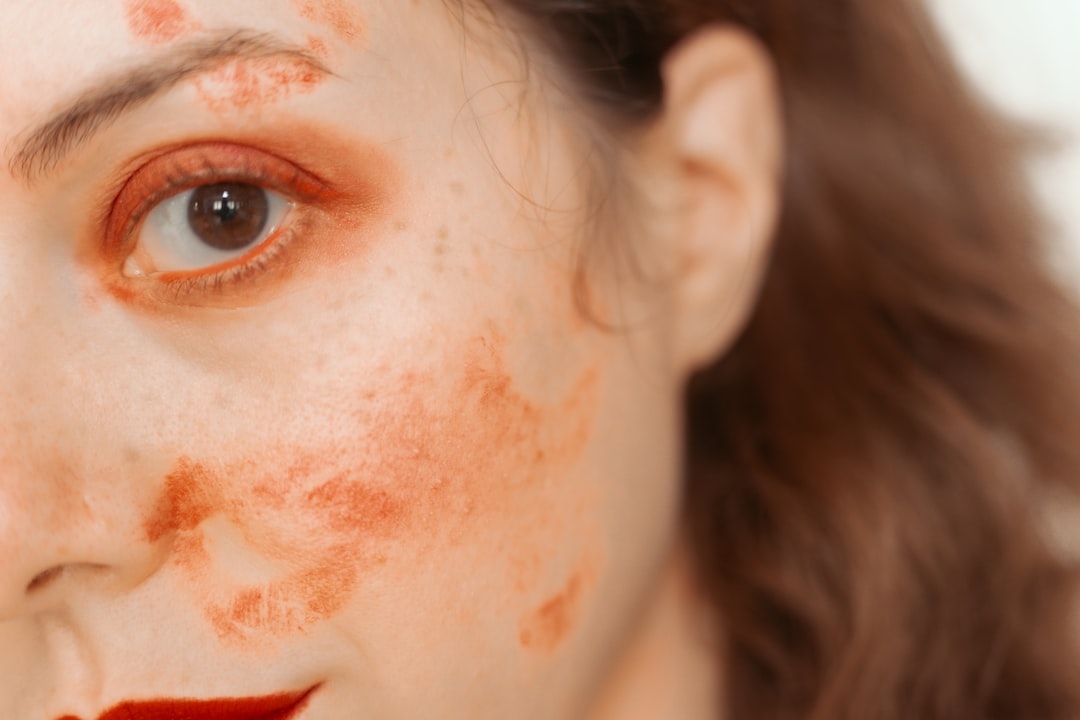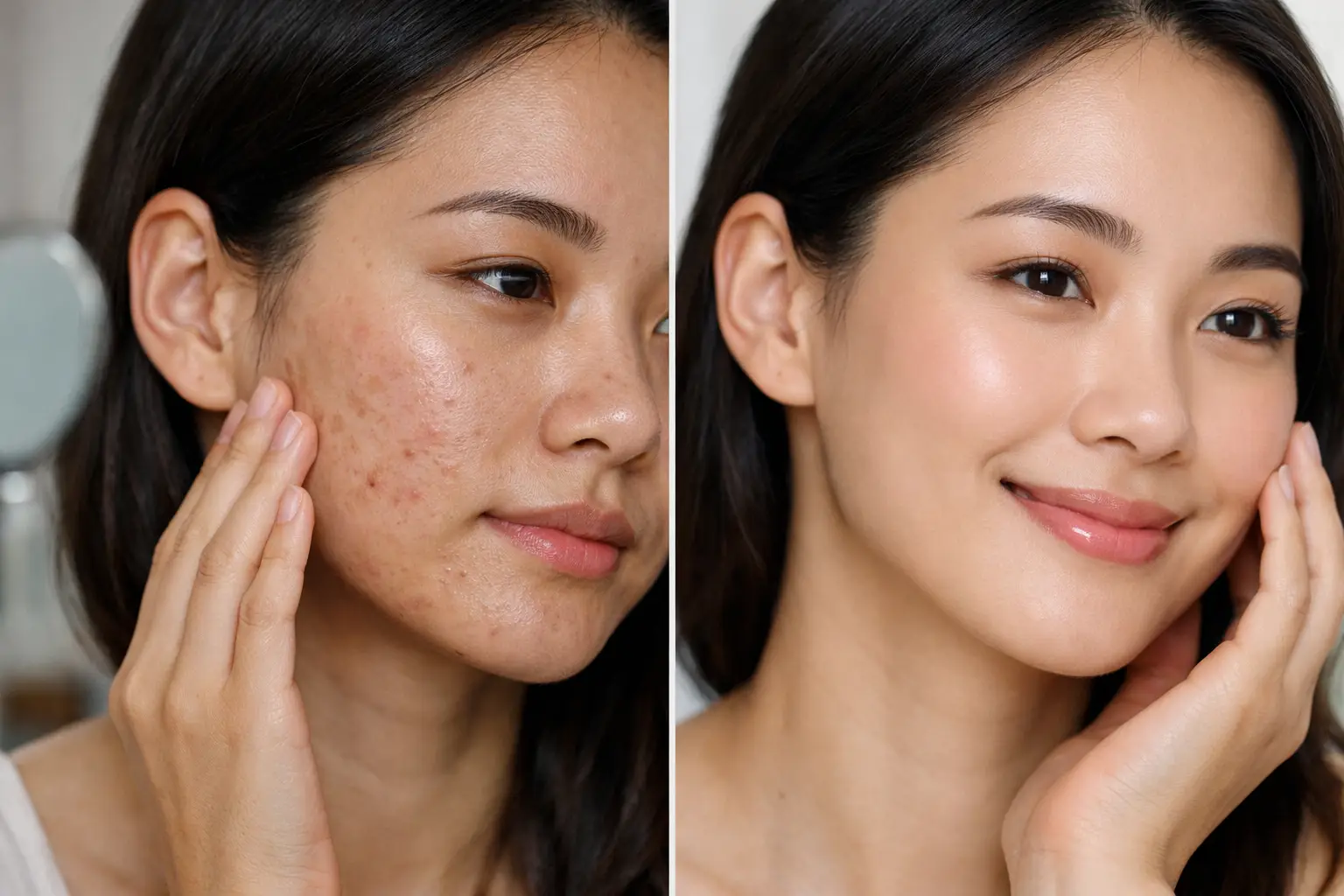
A photo can be encouraging, but it can also be misleading. When people search for acne scar treatment before after results, what they usually want is not just proof that treatment works. They want to know what is realistic for their skin, how long it takes, and whether improvement will actually show in daily life – not only under perfect lighting.
That is the right question to ask. Acne scars respond well to treatment in many cases, but results depend on scar type, skin condition, treatment selection, and consistency. A polished before-and-after image rarely shows the full story. Real progress is usually built over a series of sessions, careful treatment planning, and skin recovery that continues between appointments.
What acne scar treatment before after photos can really tell you
Before-and-after photos are useful when they are read correctly. They can show improvement in texture, softening of depressed scars, reduced shadowing, and a smoother overall appearance. They can also help set expectations for what treatment can and cannot do.
What they do not always show is how much planning went into that result. A patient with rolling scars may respond differently from someone with boxcar scars. Someone with active breakouts, post-acne redness, or pigmentation may need a staged approach before focusing fully on texture. Even the same treatment can produce different visible changes depending on collagen response, scar depth, and skin sensitivity.
This is why strong results usually come from personalized treatment plans rather than chasing a single trending procedure. Evidence-based, results-oriented care starts with identifying the scars accurately, then matching them to the most suitable treatment pathway.
The scar type matters more than most people expect
Acne scars are not all the same, and that is where many frustrations begin. If treatment is chosen without understanding the scar pattern, the before-and-after gap may be smaller than expected.
Rolling scars create broad depressions with soft edges. These often improve when treatment releases tethering under the skin and stimulates collagen remodeling. Boxcar scars have sharper edges and may need a more targeted resurfacing approach. Ice pick scars are narrower and deeper, which makes them more resistant and often slower to improve. Some patients also have enlarged pores, persistent redness, or post-inflammatory pigmentation mixed in with true scarring. That combination changes the treatment strategy.
In practice, many patients need more than one modality. That does not mean treatment is complicated for the sake of it. It means the skin usually responds best when each concern is addressed with purpose.
Which treatments improve acne scars most effectively?
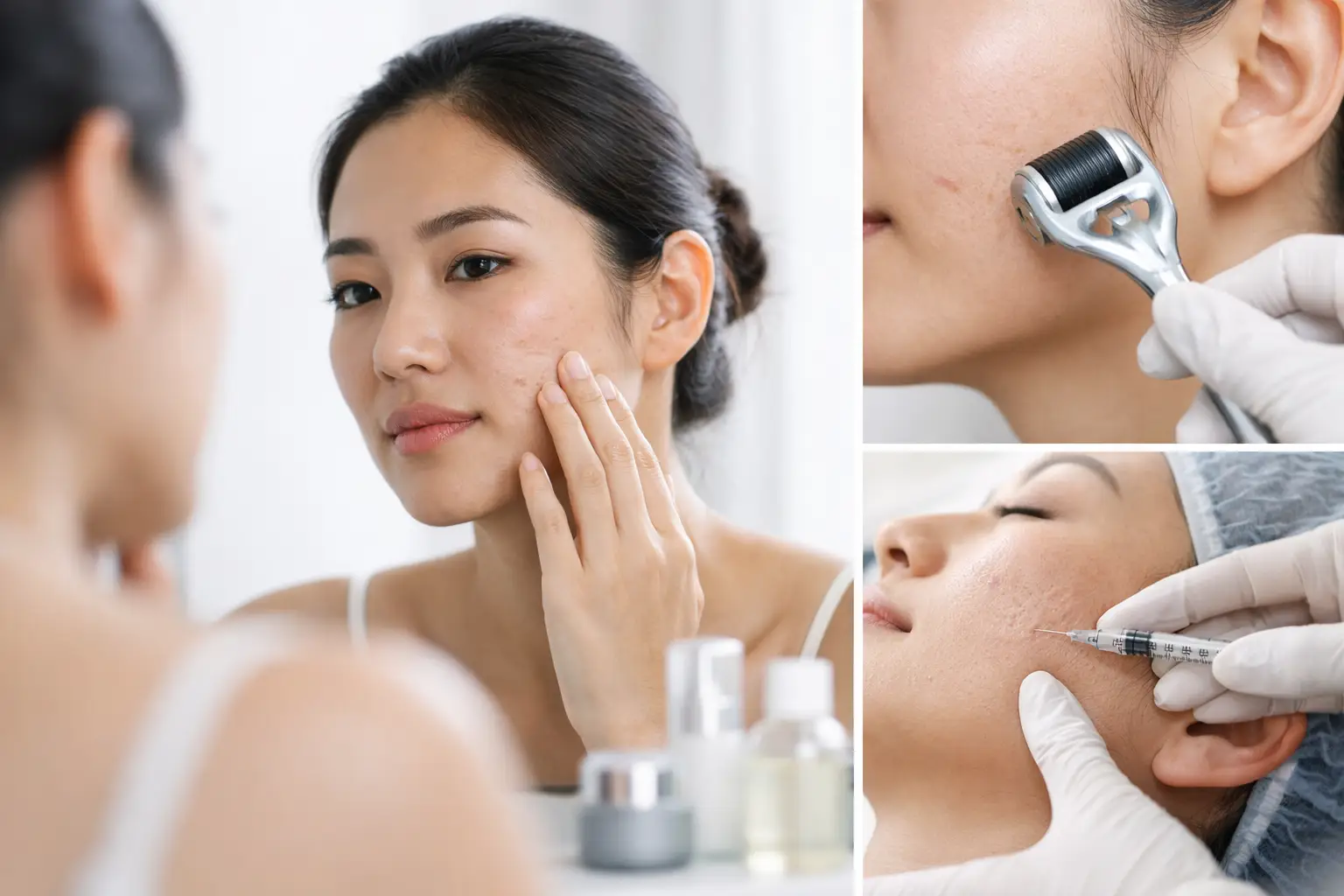
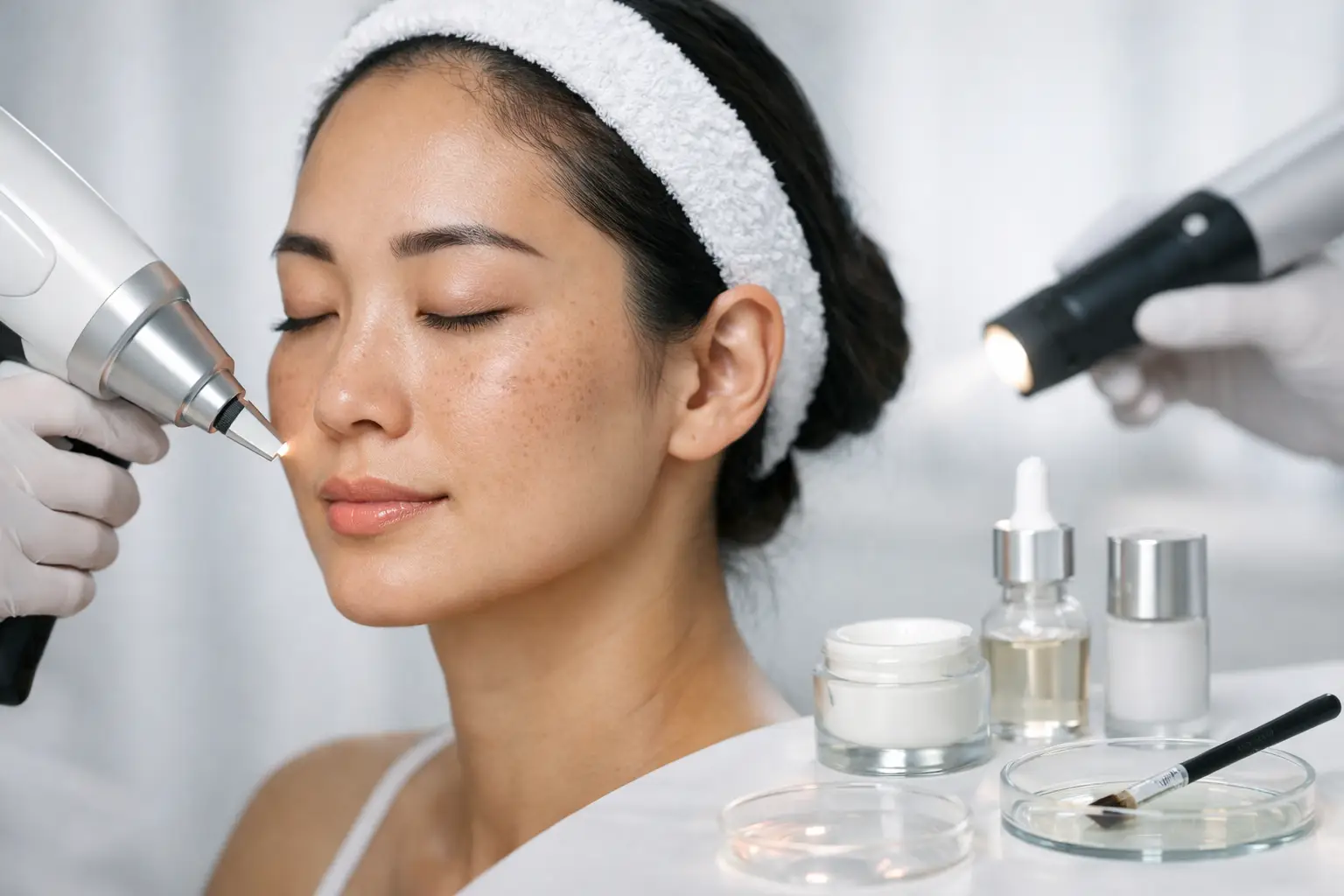
The best treatment depends on what the scars look like in person, not what sounds most impressive online. In a medical aesthetics setting, non-invasive and minimally invasive options can create meaningful improvement without surgery, especially when combined thoughtfully.
Laser treatments for texture and collagen remodeling
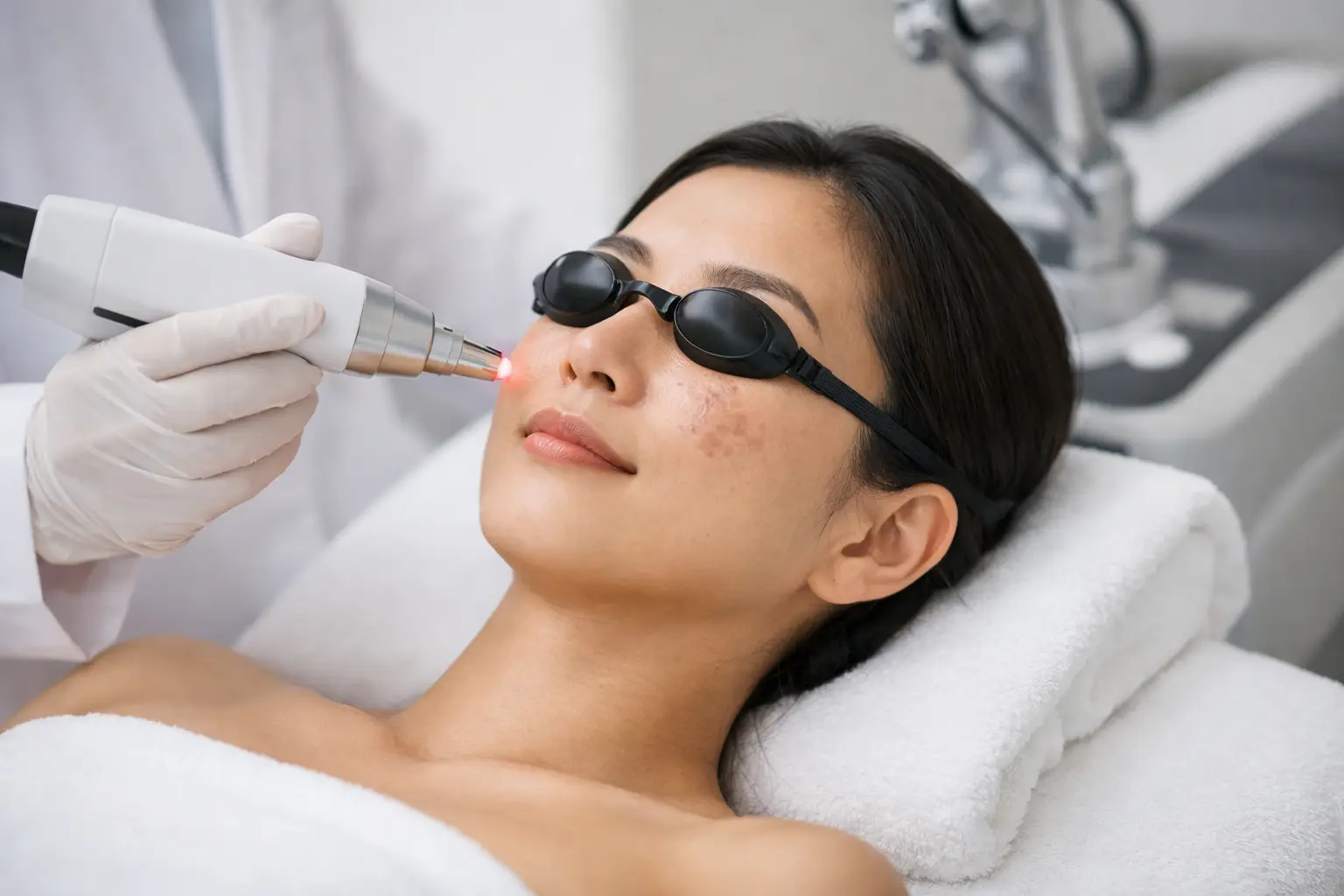
Laser treatments are often chosen for acne scars because they support collagen renewal and help refine uneven texture. Pico laser and other scar-focused laser platforms may be used as part of an overall acne scar program, particularly when there is a mix of textural irregularity and pigmentation.
The appeal of laser treatment is that it can improve skin quality beyond the scars themselves. Many patients notice smoother texture and a more refined appearance overall. The trade-off is that laser is rarely a one-session fix for established scars. Several sessions are often needed, and the response can be gradual rather than dramatic overnight.
Chemical peels for surface irregularity and discoloration
Chemical peels can help when acne scarring is accompanied by dullness, uneven tone, clogged pores, or superficial textural issues. They are especially useful as part of a broader skin renewal plan rather than as a stand-alone answer for deep depressed scars.
For the right patient, peels can make the skin look clearer and fresher, which improves the overall before-and-after result. For deeper scarring, though, they usually play a supporting role rather than a primary one.
Skin boosters and regenerative support
When acne-scarred skin also appears dehydrated, fragile, or uneven in quality, skin boosters may help improve the surrounding skin environment. HA skin boosters and polynucleotide skin boosters are not direct replacements for scar-specific treatments, but they can support smoother-looking, healthier skin and enhance the final visual result.
This matters because people do not judge their skin one scar at a time. They see the whole face. When texture, hydration, and clarity improve together, the outcome often looks more natural and more noticeable.
Why some before-after results look subtle at first
One of the biggest misconceptions about acne scar treatment is that success should be obvious after a single appointment. In reality, the skin needs time to remodel. Collagen production is a biological process, not an instant cosmetic effect.
Early improvement may show up as softer edges, less visible shadowing, and better light reflection on the skin. That can look subtle in week two and much clearer after a few months. This is one reason why professional treatment plans are usually spaced over time. The goal is not just temporary smoothing. The goal is progressive, visible improvement that continues to build.
Patients who get the best outcomes are often the ones who understand this timeline from the beginning. They stay consistent, follow aftercare carefully, and allow the skin to respond instead of expecting immediate perfection.
What affects acne scar treatment before after results?
Several factors shape the outcome, and they are worth discussing honestly.
First is scar depth and type. Shallow rolling scars tend to improve more easily than very deep, narrow scars. Second is whether active acne is still present. If breakouts continue, the skin may keep developing new marks while old ones are being treated. Third is skin quality overall. Inflammation, dehydration, sun exposure, and a weakened barrier can all affect healing and visible progress.
Your treatment history also matters. Some patients come in after trying multiple over-the-counter products that were never designed to remodel true scarring. Others may have had treatments elsewhere that improved color but not texture. A proper assessment helps separate what is scar tissue, what is pigmentation, and what is still active inflammation.
There is also the question of expectations. Most acne scar treatments aim for improvement, not complete erasure. A smoother, more even complexion is a realistic goal. Perfectly poreless skin usually is not. The most satisfying outcomes happen when improvement is both visible and believable.
How to judge whether a treatment plan is right for you
A good treatment plan should feel specific, not generic. If every patient with acne scars is offered the exact same sequence, that is a warning sign. Evidence-based aesthetic care should explain why a treatment fits your scar pattern, what degree of improvement is realistic, how many sessions may be needed, and what the recovery process looks like.
You should also feel that the plan respects your lifestyle. Some patients want the most efficient path to visible results. Others prefer lower downtime and gradual improvement. Neither preference is wrong. The right approach is the one that balances results, comfort, and practicality.
At a solution-driven clinic such as Lynn Medical & Aesthetic Clinic, the value of consultation lies in this customization. The goal is not to sell a single treatment. It is to build a targeted plan that reflects the skin in front of the practitioner.
A realistic timeline for seeing change
Most patients need a series of treatments, with visible changes building over several weeks to months. That timeline can feel slow if you are comparing yourself to a dramatic online photo, but it is often the reason results look natural and lasting.
In the early stage, the focus may be calming active acne, reducing inflammation, or improving skin tone. Then comes texture-focused treatment, often supported by collagen-stimulating procedures. Finally, refinement work may address remaining irregularities or overall skin quality.
That staged process is not a delay. It is what often makes the final result better.
If you are considering treatment, the most useful mindset is this: ask for a plan, not a promise. Before-and-after photos can inspire confidence, but your own skin deserves a strategy built around its exact needs. When treatment is personalized, medically guided, and consistent, meaningful improvement is not just possible – it becomes much more predictable.