Some acne marks fade with time. Others linger for months, catching the light in ways makeup cannot fully hide. If that sounds familiar, a chemical peel for acne marks can be a practical next step when skincare alone is no longer moving the needle.
A well-chosen peel works by accelerating skin renewal, helping discolored or uneven-looking post-acne marks clear more efficiently. For many patients, the appeal is straightforward – visible improvement without surgery, with treatment plans that can be adjusted to skin type, sensitivity, and the depth of the concern. The key is knowing what a peel can improve, where its limits are, and how to choose the right level of treatment.
What a chemical peel for acne marks actually treats
People often use the phrase acne marks to describe several different concerns, but they do not all respond the same way. This is where expectations matter.
Chemical peels are usually most helpful for post-inflammatory hyperpigmentation, which shows up as brown, tan, or grayish marks left after a breakout heals. In some cases, they can also help post-inflammatory redness look less noticeable over time by improving overall skin turnover and tone. When the skin surface feels rough or looks dull after acne, peels may also refine texture and brighten the complexion.
What they do less well is correct deeper indented acne scars on their own. Ice pick scars, boxcar scars, and rolling scars often need a broader treatment plan. A peel may still play a role, but it is usually one part of a more results-oriented approach rather than the whole answer.
How chemical peels improve acne marks
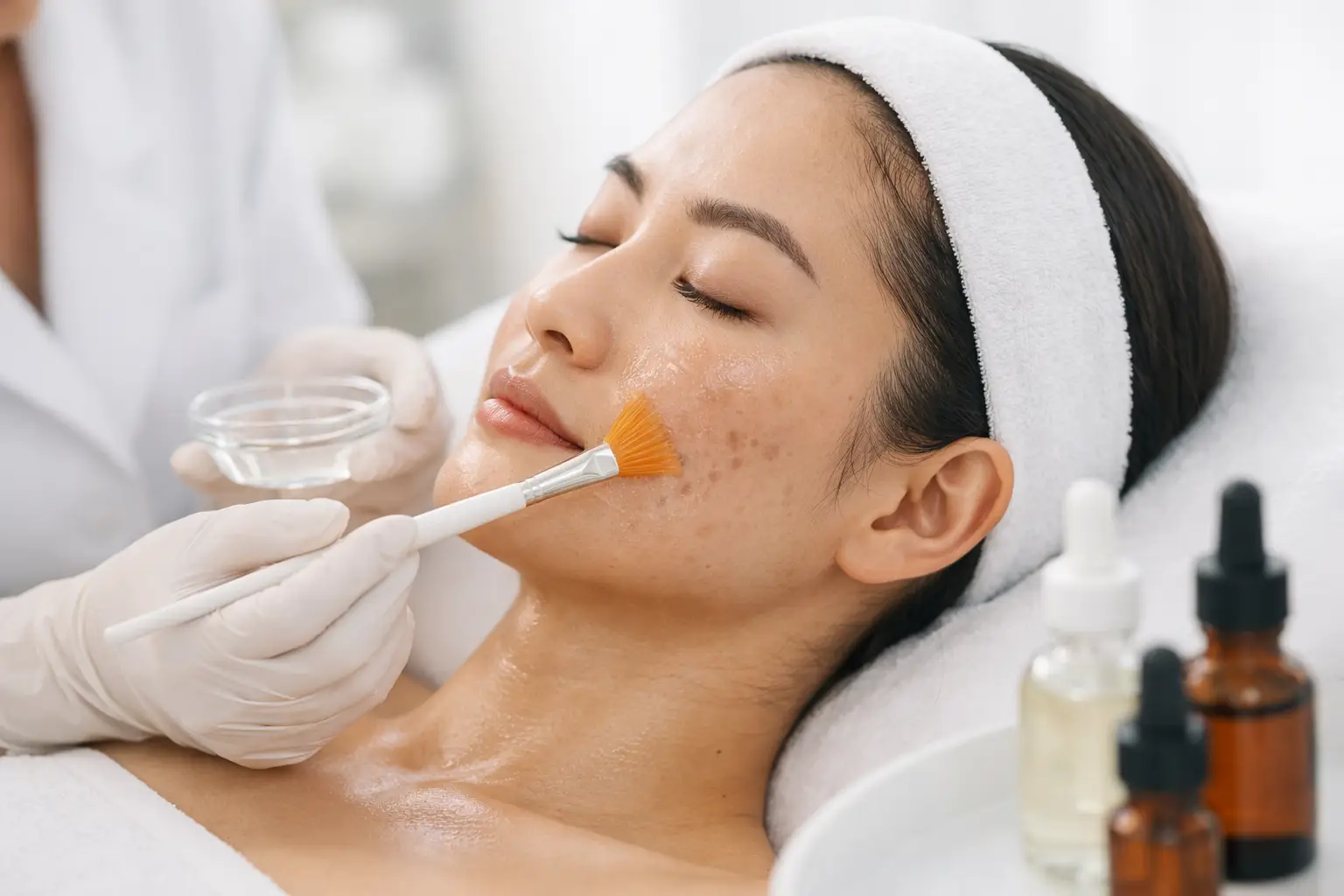
A chemical peel uses a controlled acid-based solution to exfoliate the outer layers of skin. As the treated skin sheds and renews, discoloration can gradually soften and the skin can appear more even.
The exact depth of the peel matters. Superficial peels work closer to the skin surface and are often chosen for mild pigmentation, congested skin, and patients who want lower downtime. Medium-depth peels reach further and may be considered when marks are more persistent, but they also require more recovery and stricter aftercare.
This is why a personalized assessment matters so much. The right peel is not simply the strongest one. It is the one matched to your skin tone, acne history, sensitivity, current routine, and goals.
Common peel types used for acne-prone skin
Different acids are selected for different reasons. Salicylic acid is often favored for oily or acne-prone skin because it is oil-soluble and helps clear pores while supporting exfoliation. Glycolic acid is commonly used to improve dullness, uneven tone, and superficial discoloration. Lactic acid can be a gentler option for patients who want brightening with less intensity. In selected cases, combination peels may be used to address both active breakouts and the marks they leave behind.
A more intensive peel is not automatically better. If your skin is reactive, easily irritated, or prone to post-inflammatory pigmentation, a gradual series of lighter peels may be the safer and more effective route.
Who is a good candidate for a chemical peel for acne marks
The best candidates usually have stable skin, realistic expectations, and marks that are primarily pigment-related rather than deeply scarred. If you are dealing with lingering brown marks after acne, mild textural unevenness, or a tired-looking complexion after repeated breakouts, peels can fit well into a treatment plan.
They may also suit busy professionals who want visible improvement with manageable downtime. A lunchtime-level superficial peel is very different from a stronger peel that involves several days of visible flaking, so treatment selection should align with your schedule as much as your skin.
That said, there are situations where extra caution is needed. If you have very sensitive skin, active eczema, a compromised skin barrier, or frequent irritation from retinoids and exfoliants, your skin may need to be calmed first. If you still have active inflammatory acne, your provider may decide to stabilize breakouts before focusing aggressively on the marks.
What results can you realistically expect?
This is the question most patients care about, and the honest answer is: it depends on what kind of mark you have, how long it has been there, and how your skin behaves.
For superficial post-acne discoloration, many patients notice brighter, smoother-looking skin after the first session, but clearer fading usually takes a series. A common treatment plan may involve several sessions spaced a few weeks apart, with progress building gradually. This staged approach is often more predictable than trying to force a dramatic result from one aggressive treatment.
If your acne marks are darker, older, or tied to ongoing breakouts, improvement can take longer. Deeper textural scars may show only modest change with peels alone. In those cases, combining treatments can make more sense than repeating the same peel beyond the point where it is helping.
Downtime, peeling, and aftercare
One of the biggest misconceptions is that every chemical peel leads to dramatic sheet-like peeling. In reality, recovery varies. Some superficial peels cause only mild dryness or flaking, while medium-depth peels can involve more visible peeling, redness, and tightness over several days.
After treatment, skin is usually more sensitive and more vulnerable to irritation. Sun protection becomes non-negotiable. If you are not prepared to be consistent with sunscreen, a peel is more likely to disappoint you, especially when pigmentation is the main concern.
You may also need to pause strong actives for a period before and after treatment. That can include retinoids, exfoliating acids, and potentially irritating acne products. Good aftercare is not glamorous, but it directly affects how well the skin heals and how smoothly your results develop.
What not to do after a peel
Picking at peeling skin, over-exfoliating to speed things up, or returning too quickly to active products can prolong irritation and increase the risk of uneven healing. More is not better during recovery. The goal is to support the skin barrier, not test it.
When a peel is enough, and when it is not
A chemical peel for acne marks can be excellent for the right concern, but the best treatment plan is not always a peel-only plan.
If your main issue is pigmentation after acne, peels may be one of the most efficient starting points. If your concern includes enlarged pores, recurrent breakouts, and surface roughness, peels can still be useful, especially when integrated into a broader skin program. But if you are mainly bothered by depressed acne scars, peels may need to be paired with other evidence-based options such as laser-based treatments or collagen-stimulating approaches.
This is where a consultation adds real value. A results-oriented clinic should not push one treatment for every version of acne scarring, because acne marks are not one single diagnosis. The most effective plan is the one built around your skin, not a generic trend.
How to decide if this treatment is worth it
If you are comparing chemical peels with skincare, facials, or device-based treatments, it helps to think in terms of both efficiency and fit. Skincare can absolutely support fading over time, but stubborn marks often improve faster with in-clinic treatment. Facials may leave the skin feeling refreshed, but they usually do not deliver the same level of targeted resurfacing. Device-based options may be stronger for certain scars, though they can involve higher cost or different downtime.
So is a peel worth it? Often, yes – when the issue is post-acne discoloration, the treatment plan is personalized, and your expectations are grounded in what peels actually do well. It may be less worthwhile if you are hoping a superficial peel will erase deep acne scarring in one session.
For patients who want a clinically guided, non-surgical option with a clear role in acne mark treatment, peels remain a strong choice. At Lynn Medical & Aesthetic Clinic, that decision is best made through a personalized assessment of your skin condition, treatment tolerance, and long-term goals rather than guesswork.
Questions worth asking before you book
Before committing, ask what type of acne mark you have, what kind of peel is being recommended, how many sessions are likely needed, and what downtime to expect. You should also ask how the provider plans to reduce the chance of irritation or rebound pigmentation, especially if your skin is reactive or your marks tend to darken easily.
These are not small details. They are the difference between choosing a treatment because it sounds popular and choosing one because it is appropriate.
Clearer skin rarely comes from a single trendy solution. It comes from matching the right treatment to the real problem, then giving your skin the consistency and patience it needs to respond well.