You usually notice hair loss in ordinary moments – more strands on the pillow, a widening part under bathroom lighting, thinner edges when you pull your hair back. That is often when the search for hair loss treatment begins. The challenge is that hair shedding can look similar on the surface while coming from very different causes underneath, and the right next step depends on that distinction.
For some people, the issue is gradual thinning linked to genetics. For others, it starts after stress, illness, hormonal shifts, weight changes, or scalp inflammation. A treatment plan that helps one patient may do very little for another. That is why a personalized, evidence-based approach matters. When hair loss is assessed properly, treatment becomes more focused, more realistic, and more likely to deliver visible improvement.
Why hair loss treatment is never one-size-fits-all
Hair grows in cycles. Individual strands move through a growth phase, a transition phase, and a resting phase before shedding. When that cycle is disrupted, shedding can increase or regrowth can slow down. In practical terms, this may show up as diffuse thinning, a receding hairline, patchy loss, or reduced density at the crown.
Genetic pattern hair loss is one of the most common reasons adults seek treatment. It tends to progress slowly and often affects the temples, hairline, or crown in men, while women may notice a broader part or reduced volume across the top of the scalp. But not every case follows that pattern. Some patients have telogen effluvium, which is a temporary increase in shedding often triggered by stress, childbirth, illness, surgery, or nutritional disruption. Others may have scalp conditions that affect the hair follicle environment.
This is where expectations need to be handled with care. Hair loss treatment is rarely about an overnight fix. It is about improving the scalp environment, supporting healthier growth cycles, and slowing or reducing ongoing loss. In some cases, that means regaining density. In others, success looks like stabilization and stronger, fuller-looking hair over time.
How a proper assessment shapes hair loss treatment
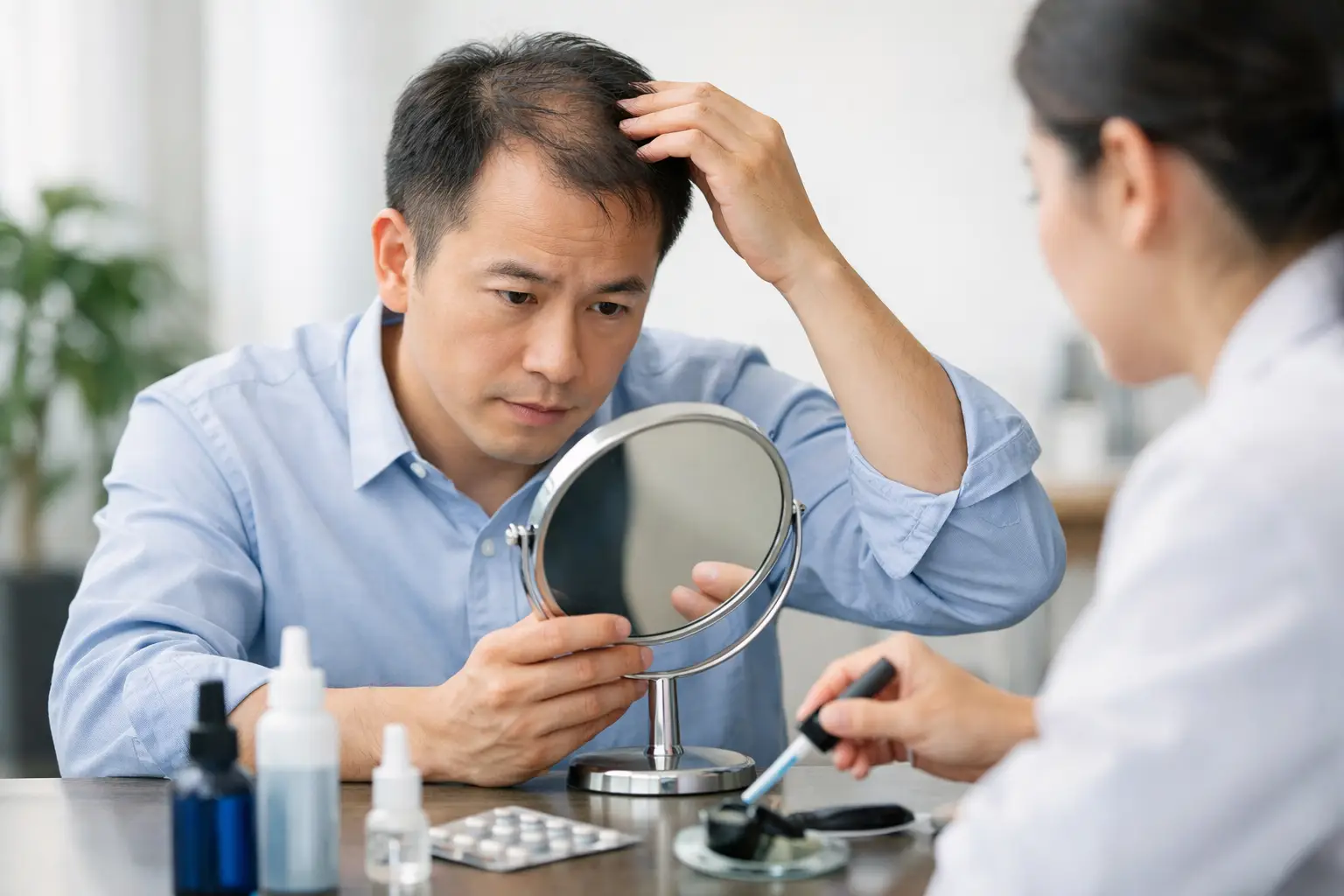
A good consultation does more than confirm that hair is thinning. It looks at the pattern, timing, severity, and possible triggers. That usually includes questions about recent stress, illness, medications, family history, diet, scalp symptoms, and hormone-related changes.
The scalp itself also matters. A scalp that is inflamed, oily, congested, or poorly balanced may not provide the ideal environment for healthy hair growth. Patients sometimes focus entirely on the strand, but the follicle and scalp condition are often where treatment needs to begin.
This kind of assessment helps answer the most important question: are you dealing with active shedding, progressive miniaturization, poor scalp health, or a mix of factors? Once that is clearer, a treatment plan can be built around the cause rather than guesswork.
Hair loss treatment options that support regrowth
Non-surgical and minimally invasive hair loss treatment options are often attractive to adults who want results without major downtime. The most suitable approach depends on the diagnosis, but treatment generally falls into several practical categories.
Scalp-focused therapies are designed to improve the condition of the scalp and support the follicle environment. These can be useful when buildup, excess oil, irritation, or poor scalp balance may be contributing to weaker growth. Patients sometimes underestimate this step because it feels less dramatic than a device-based treatment, yet it can play an important role in a broader plan.
Regenerative hair treatments are often chosen when the goal is to stimulate the scalp and encourage healthier growth activity. These treatments are especially appealing to patients who want a medically guided option that is not surgical. Depending on the individual, they may be used on their own in early stages or combined with other therapies for a more comprehensive strategy.
Energy-based or device-assisted treatments may also be considered in selected cases. These are typically positioned as supportive options rather than magic solutions. The best outcomes usually come when they are matched carefully to the patient and used consistently over time.
At Lynn Medical & Aesthetic Clinic, hair-focused care is approached in a way that is both results-oriented and personalized, which is exactly what this category demands. Hair concerns can be emotional as well as visible, so treatment should feel clinically grounded without becoming impersonal.
What results can you realistically expect?
This is one of the most important parts of any hair discussion. Hair responds slowly. Even when a treatment is effective, visible change usually takes time because follicles need to move through the growth cycle. Many patients need a few months before they can judge whether shedding has eased or density is improving.
Early progress may show up as reduced shedding, less scalp visibility, improved texture, or stronger-looking strands before obvious thickening occurs. That can be encouraging, but it also means patience matters. A treatment that is abandoned too quickly may never have had a fair chance to work.
It also depends on how long the hair loss has been present. More recent thinning often responds better than very advanced loss, especially if follicles are still active. If the follicle has been inactive for too long, the response may be more limited. That does not mean treatment has no value, but the goal may shift from dramatic regrowth to slowing progression and improving overall appearance.
When combination treatment makes more sense
Hair loss is often multifactorial, which is why combination plans are common. A patient with genetic thinning may also have stress-related shedding. Someone with postpartum hair changes may also have scalp sensitivity. In these cases, one treatment alone may not address the full picture.
A thoughtful plan may combine scalp care, regenerative treatment, and home support. The value of combination care is not about doing more for the sake of it. It is about matching each part of the plan to a specific problem. One element may calm the scalp, another may support the follicle environment, and another may help maintain results between in-clinic sessions.
This is also where personalization protects patients from disappointment. Not everyone needs the same treatment intensity or schedule. Some people benefit from a structured series followed by maintenance. Others may only need short-term support if the trigger is temporary.
Hair loss treatment at home versus in-clinic care
Home care has a role, but it has limits. If you are dealing with early shedding, mild scalp imbalance, or temporary changes, supportive home products and lifestyle adjustments may help. Better nutrition, less heat damage, gentler styling, and scalp-friendly products can all contribute to healthier-looking hair.
But when thinning is becoming more visible, lasting longer than expected, or following a clear pattern, home care alone is often not enough. That is especially true if the concern has persisted for months or keeps worsening. In-clinic treatment offers a higher level of assessment and a more targeted plan, which can save time and reduce trial-and-error spending.
There is also a psychological benefit to getting clear guidance. Hair loss can feel personal and frustrating because the mirror reflects it before anyone else says a word. Having a structured treatment path can make the problem feel manageable again.
Signs it is time to seek professional help
If your part is widening, your ponytail feels thinner, your scalp is becoming more visible, or your hairline is changing, it is worth getting assessed. The same applies if shedding increased after a major life event and has not settled, or if you have itching, flaking, tenderness, or irritation on the scalp.
Earlier intervention tends to give you more options. Waiting does not always make treatment impossible, but it can make improvement harder to achieve. Hair loss treatment works best when it starts before thinning becomes deeply established.
A good provider will not treat every case the same way. They should explain what may be causing the issue, what treatment is appropriate, what timeline is realistic, and where the limits are. That combination of honesty and strategy matters just as much as the treatment itself.
Hair changes can affect confidence in a quiet but persistent way. The right response is not panic and it is not guesswork. It is a plan built around your pattern, your scalp, and your goals, so every step has a reason behind it.