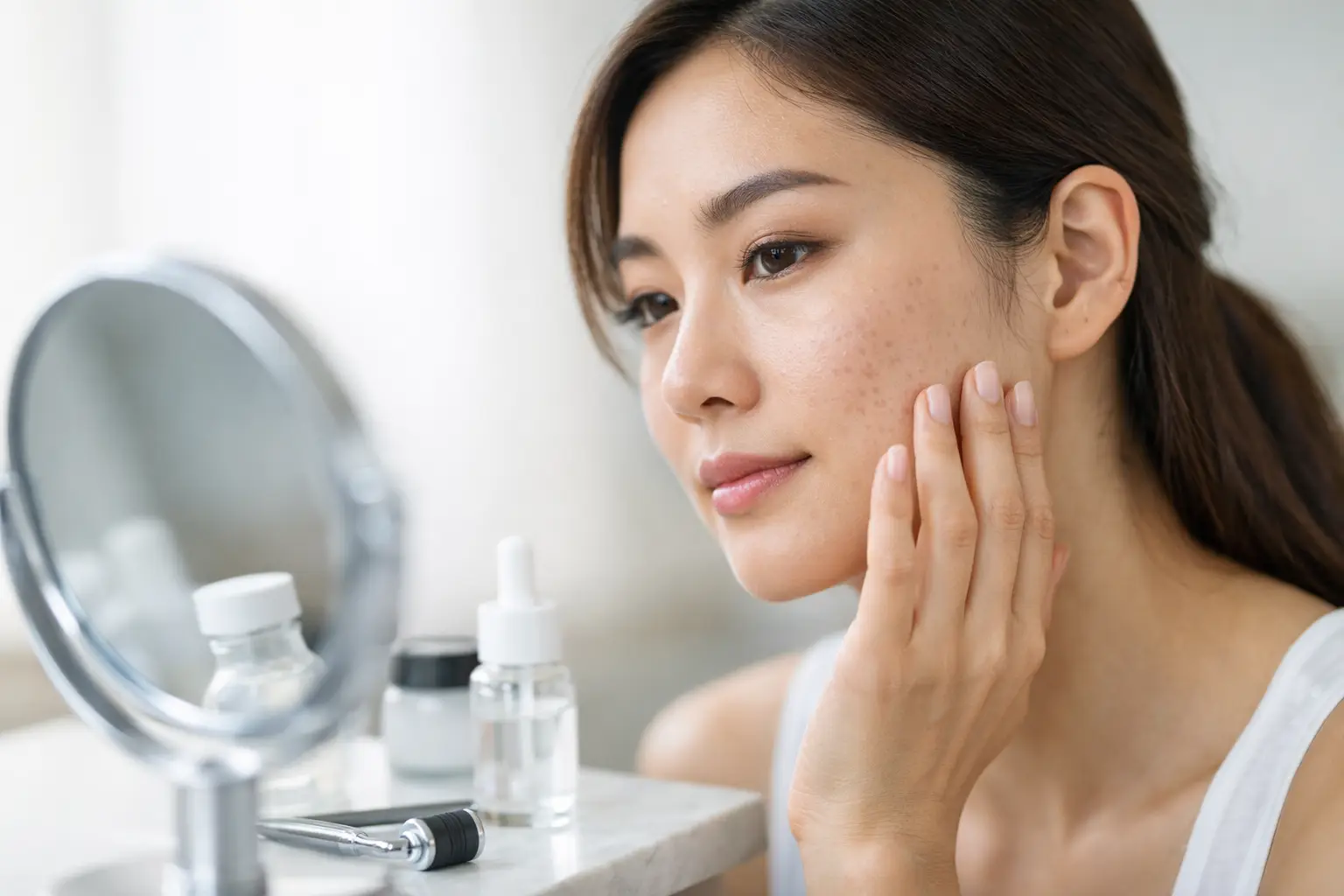
Acne may be gone, but the marks it leaves behind can keep drawing your attention in the mirror. A good guide to acne scar removal should do more than list treatments – it should help you understand why scars form, which options suit your skin, and what kind of improvement is realistic.
Acne scars are not all the same, and that is where many people get stuck. One person may have shallow rolling scars that soften well with energy-based treatments. Another may have deeper boxcar or ice pick scars that need a more layered approach. If your treatment plan does not match the scar type, results can be slow, uneven, or disappointing.
A practical guide to acne scar removal starts with scar type
Most acne scars fall into two broad groups: atrophic scars, which look indented, and post-acne marks, which are flat areas of discoloration. These are often confused, but they are treated differently.
Atrophic scars include ice pick, boxcar, and rolling scars. Ice pick scars are narrow and deeper, almost like tiny punctures. Boxcar scars have more defined edges and can be shallow or deep. Rolling scars create a wave-like texture because fibrous bands pull the skin downward. These texture changes usually need treatments that stimulate collagen, release tethering, or resurface the skin.
Post-acne marks are usually red, pink, brown, or gray depending on skin tone and inflammation. These are not true scars in the structural sense, even though many patients call them acne scars. They often respond better to lasers, chemical peels, and skin-brightening strategies than to treatments focused purely on collagen remodeling.
This distinction matters because a treatment that fades pigmentation may do very little for indentation, while a treatment that improves texture may not fully address leftover discoloration.
Why acne scars happen
Scarring develops when inflammation disrupts the skin’s normal healing process. Severe breakouts carry a higher risk, but even moderate acne can leave scars if inflammation runs deep or lesions are repeatedly picked, squeezed, or irritated.
Your skin’s repair response also plays a role. Some people naturally form more visible scars because of collagen loss, delayed healing, or a tendency toward prolonged pigmentation after inflammation. That is why two people with similar acne can end up with very different skin texture.
Timing matters too. Treating active acne early can reduce the risk of future scars. If breakouts are still happening, scar treatment may need to be staged carefully so you are not trying to repair old damage while new inflammation continues.
The most effective acne scar removal options
When patients ask for the best treatment, the honest answer is that it depends on the scar pattern, skin condition, and your tolerance for downtime. Results-oriented care is usually based on combination planning rather than a single procedure.
Laser treatments
Laser treatments are often chosen when scars are mixed with pigmentation or uneven skin tone. Certain laser technologies can target discoloration, while others focus more on collagen stimulation and resurfacing.
Pico laser is often discussed for pigment concerns and overall skin renewal. In some patients, it can also support gradual textural improvement by stimulating collagen. However, deeper acne scars usually need more than one laser session, and often more than one treatment modality. If the scars are sharply indented, laser alone may not be enough.
For patients with visible redness or post-inflammatory pigmentation alongside mild textural irregularity, laser-based treatment can be a strong part of the plan. The trade-off is that improvement tends to be progressive rather than immediate, and several sessions are commonly needed.
Chemical peels
Chemical peels can help brighten post-acne marks, smooth superficial irregularities, and refine overall skin quality. They are especially useful when dullness, clogged pores, and uneven tone are part of the picture.
That said, peels have limits. They are not usually the main answer for deep rolling or ice pick scars. Think of them as a supportive treatment that can improve skin clarity and enhance the results of a broader scar program.
Skin rejuvenation treatments
Collagen-stimulating skin rejuvenation treatments can help improve mild to moderate textural changes over time. These approaches are often appealing to patients who want visible improvement without surgery and with manageable downtime.
The benefit of this category is versatility. It can be useful for patients whose scars are not extremely deep but are spread across larger areas of the cheeks or temples. The limitation is that subtle scars tend to respond better than severe, sharply edged ones.
Combination treatment plans
In many cases, the best guide to acne scar removal is not about finding one perfect treatment. It is about sequencing treatments properly. A patient with pigmentation, shallow boxcar scars, and early skin laxity may benefit from laser sessions first, then collagen-focused rejuvenation, then maintenance treatments to preserve smoothness and clarity.
This personalized approach is often where patients see the most meaningful change. It also helps manage expectations, because improvement in color, texture, and pore appearance does not always happen at the same pace.
What results are realistic
The goal of acne scar treatment is improvement, not perfection. Skin can become smoother, clearer, and more even-looking, but fully erasing scars is rarely realistic.
For many patients, a good result means scars are less visible in daylight, makeup sits more smoothly, and the skin looks healthier without harsh lighting revealing every indentation. That level of change can make a real difference in confidence.
The number of sessions varies. Some people notice a fresher, more refined look after early treatments, while more established scarring can require a series over several months. Depth, age of scars, skin sensitivity, and the presence of ongoing acne all affect the timeline.
How to choose the right clinic and treatment plan
If you are investing in treatment, look for an approach that is personalized and evidence-based rather than one-size-fits-all. Acne scar removal works best when your provider evaluates scar type, skin tone, current breakouts, and your goals before recommending a plan.
A thoughtful consultation should explain what each treatment is designed to improve, how many sessions may be needed, and where the limits are. This matters because overpromising is common in aesthetics, and acne scars are a concern where nuance is essential.
You should also consider your lifestyle. Some patients are comfortable with a treatment series and short periods of visible recovery. Others want lower-downtime options they can fit around work and social commitments. Neither approach is wrong, but the plan should reflect your priorities.
At a solution-driven aesthetic clinic such as Lynn Medical & Aesthetic Clinic, the value of treatment planning is not just in choosing a device. It is in matching the treatment pathway to your skin’s actual needs so results look natural and progress feels measurable.
Supporting your results at home
Professional treatment does the heavy lifting, but home care still matters. If your skin remains inflamed, overly dry, or poorly protected from sun exposure, progress can slow down.
A consistent routine should focus on gentle cleansing, hydration, and daily sun protection. If you are prone to breakouts, controlling active acne is part of scar prevention. If pigmentation lingers easily, protecting the skin from UV exposure becomes even more important because dark marks can persist longer when skin is repeatedly exposed.
Avoid aggressive scrubbing or constantly switching products in hopes of speeding things up. Irritated skin often looks more uneven, not less. In scar treatment, steady care tends to outperform extremes.
When to start acne scar treatment
Many adults wait years before seeking help because they assume scars are permanent or that treatment will be too invasive. In reality, non-surgical and minimally invasive options can improve a wide range of acne-related concerns, especially when treatment is planned carefully.
If you still have active acne, that does not always mean you need to delay everything. It may simply mean the first step is getting breakouts under better control while building a scar strategy for the next phase. Starting earlier can prevent the cycle from continuing.
The right time is usually when the scars bother you enough that you are thinking about them regularly, and when you are ready to commit to a treatment plan rather than expect a one-session fix. Better skin rarely comes from chasing the quickest option. It comes from choosing the right one and giving it time to work.
If acne scars have been affecting how you see your skin, a clear plan can change more than texture alone. The right treatment pathway should leave you looking like yourself – just smoother, more even, and more confident each time you catch your reflection.