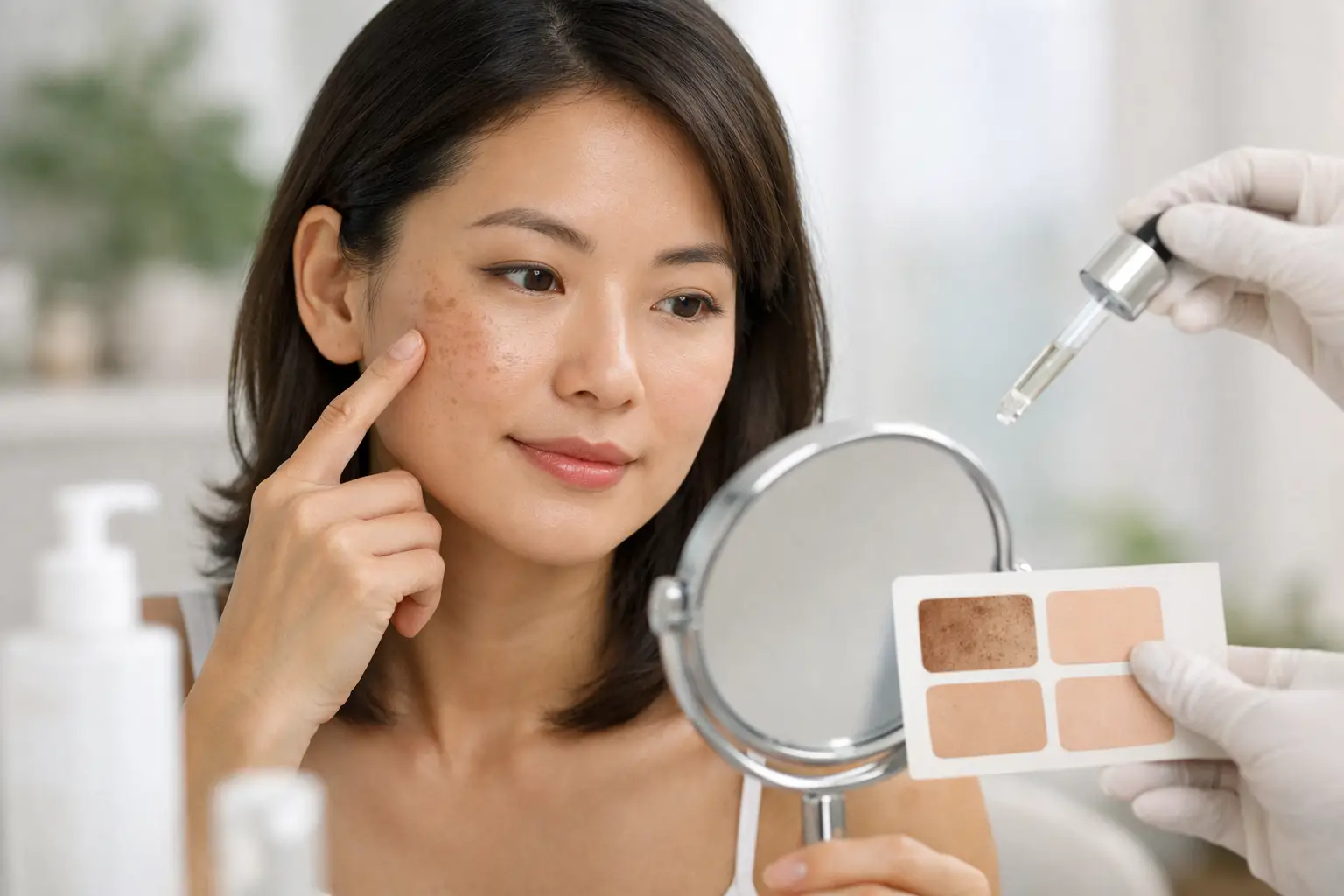
Pigmentation rarely shows up all at once. It starts as a faint patch after a breakout, a few sun spots that seem harmless, or uneven tone that makes skin look tired even when it is healthy. If you have been wondering what is pigmentation correction, the short answer is this: it is a targeted approach to reducing excess pigment in the skin so your complexion looks clearer, more even, and more refined.
That answer is simple, but the reality is more nuanced. Pigmentation correction is not one treatment and it is not one diagnosis. It is a treatment strategy built around the reason the discoloration developed, how deep the pigment sits in the skin, your skin type, and how much improvement you want with the least possible disruption to daily life.
What is pigmentation correction in aesthetic medicine?
In aesthetic medicine, pigmentation correction refers to non-surgical treatments used to improve visible discoloration caused by excess melanin. Melanin is the pigment that gives skin its color. When the skin produces too much melanin in certain areas, it can lead to dark spots, patches, or uneven tone.
The goal is not to change your natural skin color. It is to restore a more balanced, even appearance where unwanted pigmentation has developed. That distinction matters. Effective correction is about precision, not over-treatment.
This is why evidence-based, results-oriented care is so important. A sun spot, post-acne mark, and melasma patch may all look like pigmentation to the eye, but they do not always respond to the same treatment in the same way.
Why pigmentation happens in the first place
Pigmentation develops when the skin reacts to a trigger by producing more melanin than usual. Sometimes that trigger is obvious, and sometimes it builds over time.
Sun exposure is one of the most common causes. UV exposure stimulates melanocytes, the cells that produce pigment, and repeated exposure can lead to freckles, sun spots, and broader unevenness. Hormonal shifts can also play a role, especially in melasma, which often appears as patchy brown discoloration on the cheeks, forehead, or upper lip.
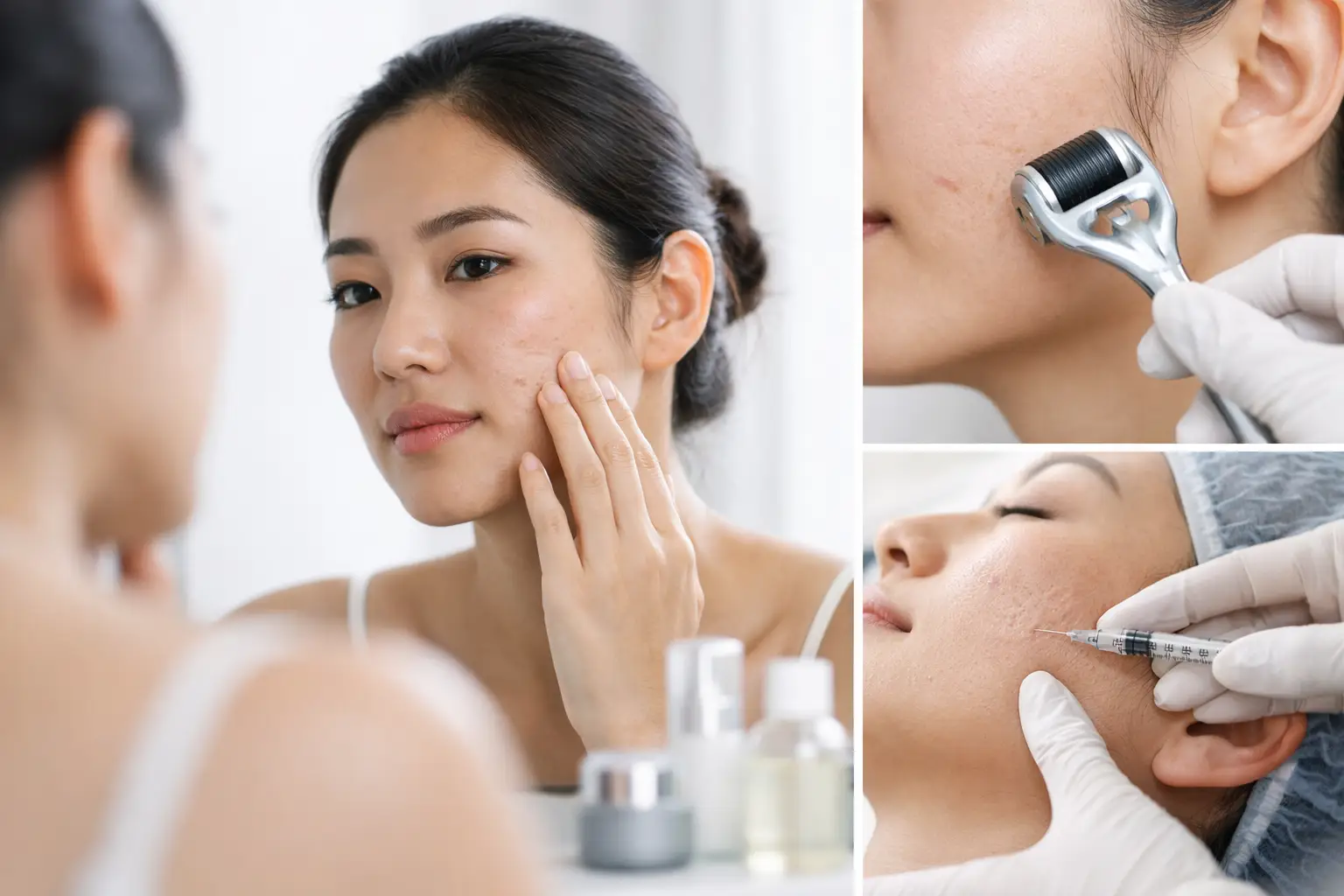
Inflammation is another major factor. After acne, irritation, or minor skin injury, the skin may leave behind post-inflammatory hyperpigmentation. These marks can linger long after the original blemish has healed, which is why many patients feel their acne is technically gone but their skin still does not look clear.
Some pigmentation is superficial and responds relatively quickly. Some sits deeper and requires more patience. That is one reason treatment plans need to be personalized rather than copied from someone else’s experience.
The most common types of pigmentation correction concerns
When patients ask about pigmentation correction, they are usually referring to one or more of a few common concerns. Sun spots and age spots often appear as small, defined brown marks in areas with frequent sun exposure. Freckles can become more prominent over time. Post-acne marks tend to follow breakouts and can vary from light brown to gray-brown depending on skin tone and depth.
Melasma is often more complex. It tends to appear in broader patches and may be influenced by hormones, heat, and sun exposure. It can also be more likely to recur, even after visible improvement. That does not mean it cannot be treated. It means treatment should be thoughtful, gradual, and focused on long-term control as much as short-term brightening.
How pigmentation correction works
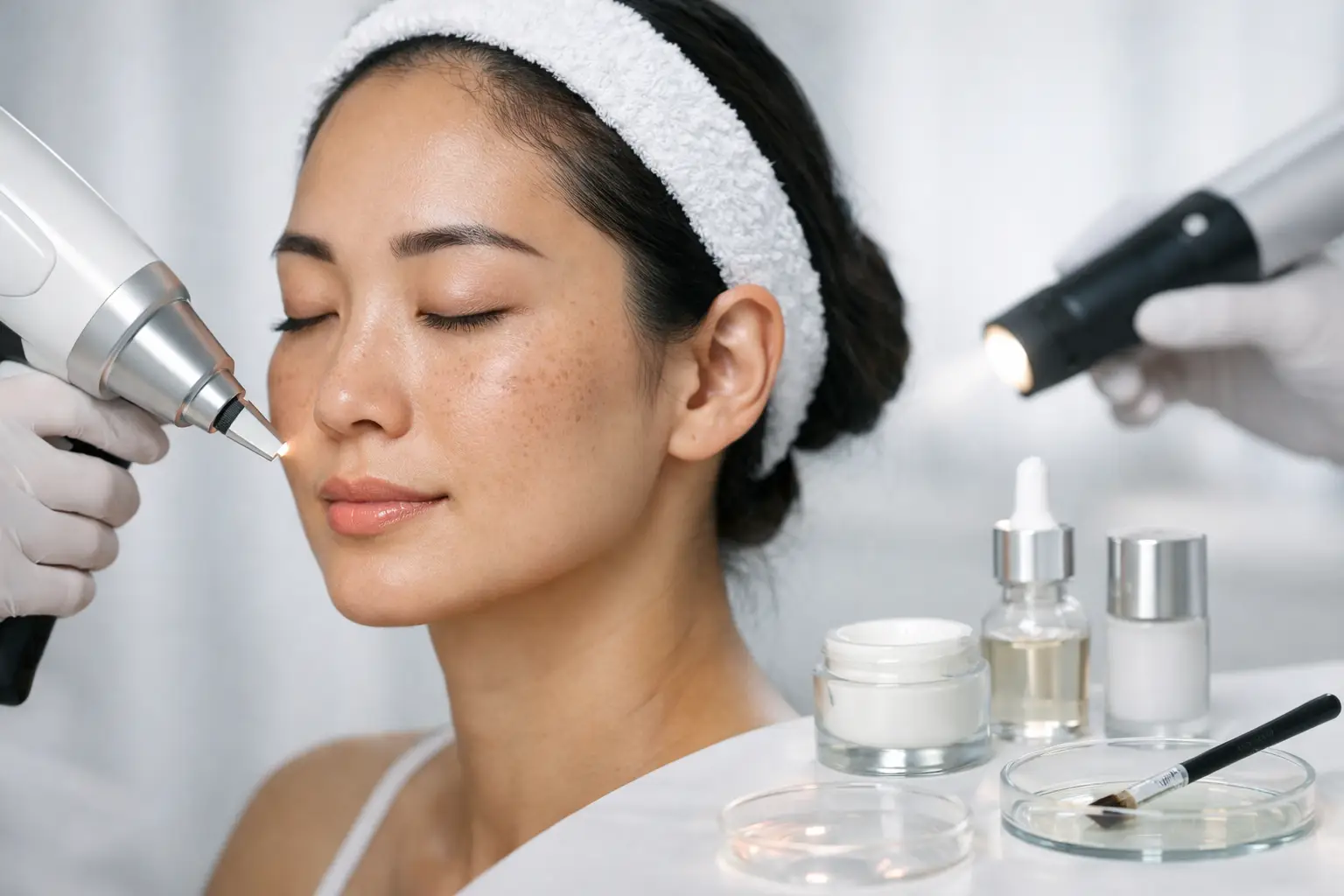
Pigmentation correction works by breaking down excess pigment, speeding up skin cell turnover, calming triggers that cause overproduction of melanin, or combining these effects in a treatment plan.
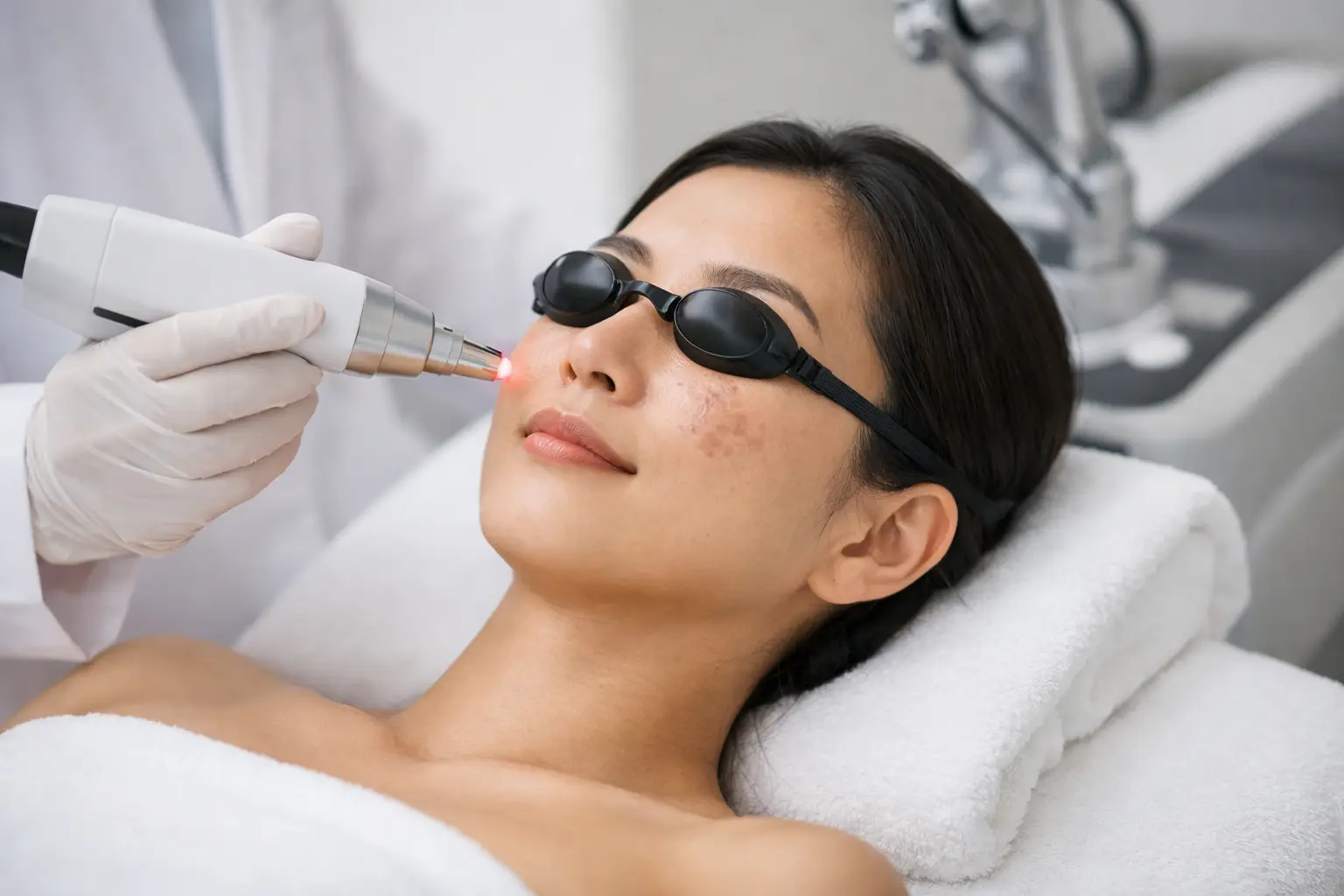
For some patients, laser-based treatments are the most effective option. Pigmentation lasers and pico laser technology are commonly used to target unwanted pigment with precision. These treatments deliver energy into the skin to fragment pigment so the body can naturally clear it over time. They can be especially useful for certain sun spots, freckles, and selected forms of post-inflammatory pigmentation.
For others, chemical peels may be part of the plan. A professionally selected peel can help exfoliate pigmented surface cells and improve skin renewal. This can be helpful for mild uneven tone, acne-related discoloration, and dullness that makes pigmentation appear more obvious.
Topical skincare may also support correction, especially when used to maintain results between in-clinic sessions. The exact combination depends on the diagnosis, the sensitivity of your skin, and how aggressively you want to treat the concern.
What is pigmentation correction not?
It is not an instant fix. Even when a treatment works well, pigment usually fades in stages. The skin needs time to process and clear what has been targeted.
It is also not the same as whitening. A medically guided pigmentation correction plan aims to improve unevenness and restore clarity, not create an artificial or unnatural result.
Just as importantly, pigmentation correction is not one-size-fits-all. The wrong treatment can irritate the skin and make discoloration harder to manage, especially in skin that is reactive or prone to post-inflammatory changes. That is why professional assessment matters before choosing lasers, peels, or active products.
Which treatments may be used for pigmentation correction?
A personalized plan may include one treatment or a combination approach. Laser treatments are often chosen when pigment is more defined or deeper in the skin. Pico laser treatments are known for delivering very short pulses that target pigment with minimal thermal spread, which can make them a strong option for selected pigmentation concerns and for patients who want effective treatment with manageable downtime.
Pigmentation lasers may be recommended when the goal is to treat specific dark spots or uneven patches with precision. Chemical peels can complement laser sessions by improving surface turnover and overall skin texture. In some cases, skin rejuvenation treatments are added to support brightness and skin quality more broadly, especially when pigmentation appears alongside dullness, fine lines, or acne-related textural change.
The right plan depends on the pattern of pigmentation, your skin tone, how your skin tends to heal, and your schedule. Some patients want a gradual approach with little interruption to work and social activities. Others are comfortable with a more intensive plan if it may deliver faster visible change.
What to expect from a consultation
A good consultation should do more than label the problem as pigmentation. It should identify the type, likely trigger, and realistic treatment pathway.
Your provider may examine whether the discoloration is epidermal, dermal, or mixed, because depth affects how well different treatments perform. They should also ask about sun exposure, acne history, hormonal factors, current skincare, and any past treatments that caused irritation or rebound darkening.
This is where a clinic’s value becomes clear. A solution-driven aesthetic clinic does not simply recommend the most popular treatment. It recommends the most appropriate one. At Lynn Medical & Aesthetic Clinic, that kind of personalized planning is central to achieving visible improvement while respecting skin health and safety.
How many sessions does pigmentation correction take?
This depends on the concern. Some superficial spots respond quickly, while melasma and deeper post-inflammatory pigmentation usually require more patience.
Most patients benefit from a series of treatments rather than a single session. Improvement can often be seen progressively, with pigment becoming lighter, tone looking more even, and skin appearing clearer overall. That said, maintenance may still be needed. Pigmentation has a habit of returning if the original trigger is still active, especially when sun exposure is not controlled.
That is not a flaw in treatment. It is the nature of pigment biology. The best outcomes come from a realistic plan that includes both correction and prevention.
Why aftercare matters as much as the treatment itself
Even the most advanced treatment can be undermined by poor aftercare. Sun protection is essential because UV exposure can stimulate fresh pigment production while the skin is healing. For many patients, daily sunscreen becomes just as important as the procedure itself.
Skin barrier support also matters. Overusing acids, scrubs, or strong actives while the skin is recovering can trigger irritation and set progress back. A calmer, more consistent routine usually supports better results than an aggressive one.
This is especially true for patients with sensitive skin or a history of pigmentation after inflammation. In these cases, controlled treatment plus thoughtful aftercare often performs better than chasing fast results.
Is pigmentation correction worth it?
For many patients, yes, because pigmentation affects more than just tone. It can make skin look older, less rested, or less clear even when there are no active breakouts or major texture concerns. Correcting uneven pigment often helps the whole face look fresher and more polished without changing your features.
The key is choosing a plan based on your skin, not trends. The best pigmentation correction is measured, personalized, and clinically guided. It respects the fact that clearer skin is not about doing the most. It is about doing the right thing, in the right order, for the right reason.
If pigmentation has been lingering longer than you expected, that usually means it is time for a more targeted approach. With the right assessment and a treatment plan built around your skin’s needs, clearer and more even-looking skin is a realistic goal.