Spider veins, medically referred to as telangiectasias, are a common vascular condition that affects many individuals in Singapore and worldwide. Characterised by superficial blood vessels that become visible beneath the surface of the skin, they are often a source of concern for those affected. While they are frequently viewed from an aesthetic standpoint, understanding the underlying physiology of these veins is essential for managing them appropriately. Advancements in medical science have introduced various modalities designed to address superficial vascular concerns. However, navigating these options requires a clear understanding of what the treatments entail, their limitations, and the necessary medical assessments involved.
The purpose of this article is to provide an educational overview of spider veins, the generic treatment options available in medical settings, and what individuals may expect should they consider undergoing these procedures.
To properly address vascular conditions on the skin, it is important to first understand their anatomy, how they form, and how they differ from other vascular issues.
What Are Spider Veins?
Spider veins are extremely small, dilated blood vessels that branch out closely to the surface of the skin. They typically measure less than one millimetre in diameter. Due to their branching network, they often resemble a spider’s web or the branches of a tree, which is how they acquired their colloquial name. Depending on the level of oxygen in the blood they carry and their depth within the dermis, these veins may appear red, purple, or blue. They are most commonly found on the lower extremities, particularly the thighs, calves, and ankles, though they can also develop on the face and other parts of the body.
Common Causes and Risk Factors
The development of spider veins is influenced by a multitude of factors, and they often arise when the tiny valves within the veins begin to weaken. Under normal circumstances, these valves ensure that blood flows in one direction—back toward the heart. When they become compromised, blood can pool in the superficial vessels, causing them to expand and become visible.
Several risk factors contribute to this condition. Genetics plays a substantial role; individuals with a family history of visible vascular conditions are statistically more likely to develop them. Hormonal fluctuations are another significant factor, which is why spider veins are observed more frequently in women. Life events that alter hormone levels, such as pregnancy or menopause, can increase the likelihood of their appearance. Furthermore, occupational factors, particularly jobs that necessitate prolonged periods of sitting or standing, can elevate pressure in the lower leg veins, gradually contributing to venous pooling. Age and cumulative sun exposure are additionally known to exacerbate the development of facial spider veins.
Spider Veins vs. Varicose Veins
It is crucial to distinguish spider veins from varicose veins, as the two conditions have different clinical implications. While both involve compromised vein valves, varicose veins are larger, deeper, and often appear as raised, twisted, or bulging cords on the legs. Varicose veins are more frequently associated with physical symptoms such as aching, heaviness, throbbing, or swelling in the legs, and they may be an indicator of a more significant underlying condition known as chronic venous insufficiency. Spider veins, conversely, are typically flat or only slightly raised, and while they may occasionally cause minor local discomfort or itching, they are generally not associated with severe medical complications. Understanding this distinction helps in determining the appropriate clinical approach.
If you’re considering spider vein treatment in Singapore, it’s essential to understand the various factors that can affect your skin’s health and appearance. A related article that delves into common misconceptions about skincare is available at Late Night Skincare Myths That Might Be Holding Back Your Glow. This resource provides valuable insights that can complement your journey toward healthier skin and enhance the results of any vein treatment you pursue.
Medical Assessments and Suitability for Treatment
Before any intervention can take place, a thorough medical evaluation by a qualified healthcare professional is fundamentally required. Treatment suitability varies greatly among individuals, depending on overall health and the specific characteristics of the vascular concern.
The Importance of a Professional Evaluation
A comprehensive consultation typically begins with a detailed medical history. A practitioner will inquire about symptoms, family history of vascular disease, prior blood clots, current medications, and any previous aesthetic or medical treatments. During the physical examination, the practitioner evaluates the size, depth, and spread of the visible veins.
In some instances, particularly if the individual reports symptoms like leg swelling or heaviness, the practitioner may recommend a diagnostic ultrasound. This non-invasive imaging test helps to map the deeper venous system and assess valve function. Identifying underlying venous insufficiency is critical; if deeper feeder veins (reticular veins) or varicose veins are present but left untreated, addressing only the surface spider veins may yield suboptimal outcomes, and the surface veins are likely to recur rapidly.
Determining Treatment Suitability
Not every individual with spider veins is an immediate candidate for medical intervention. Healthcare providers must evaluate various contraindications to ensure patient safety. For example, individuals who are currently pregnant or breastfeeding are typically advised to postpone vascular treatments.
Patients with a history of deep vein thrombosis (DVT), severe systemic illnesses, active skin infections in the treatment area, or compromised immune systems may not be suitable candidates. Additionally, certain medications, such as blood thinners or specific supplements that affect blood coagulation, may need to be managed or paused under medical supervision prior to any procedure. The decision to proceed with treatment is always made on a case-by-case basis, carefully weighing the potential benefits against the clinical risks.
Generic Treatment Modalities for Spider Veins
Once a patient is deemed suitable for treatment, medical practitioners may recommend one or more evidence-based modalities. The field of aesthetic medicine utilizes treatments that aim to close off the affected vessels, allowing the body to naturally reroute the blood through healthier veins.
Sclerotherapy
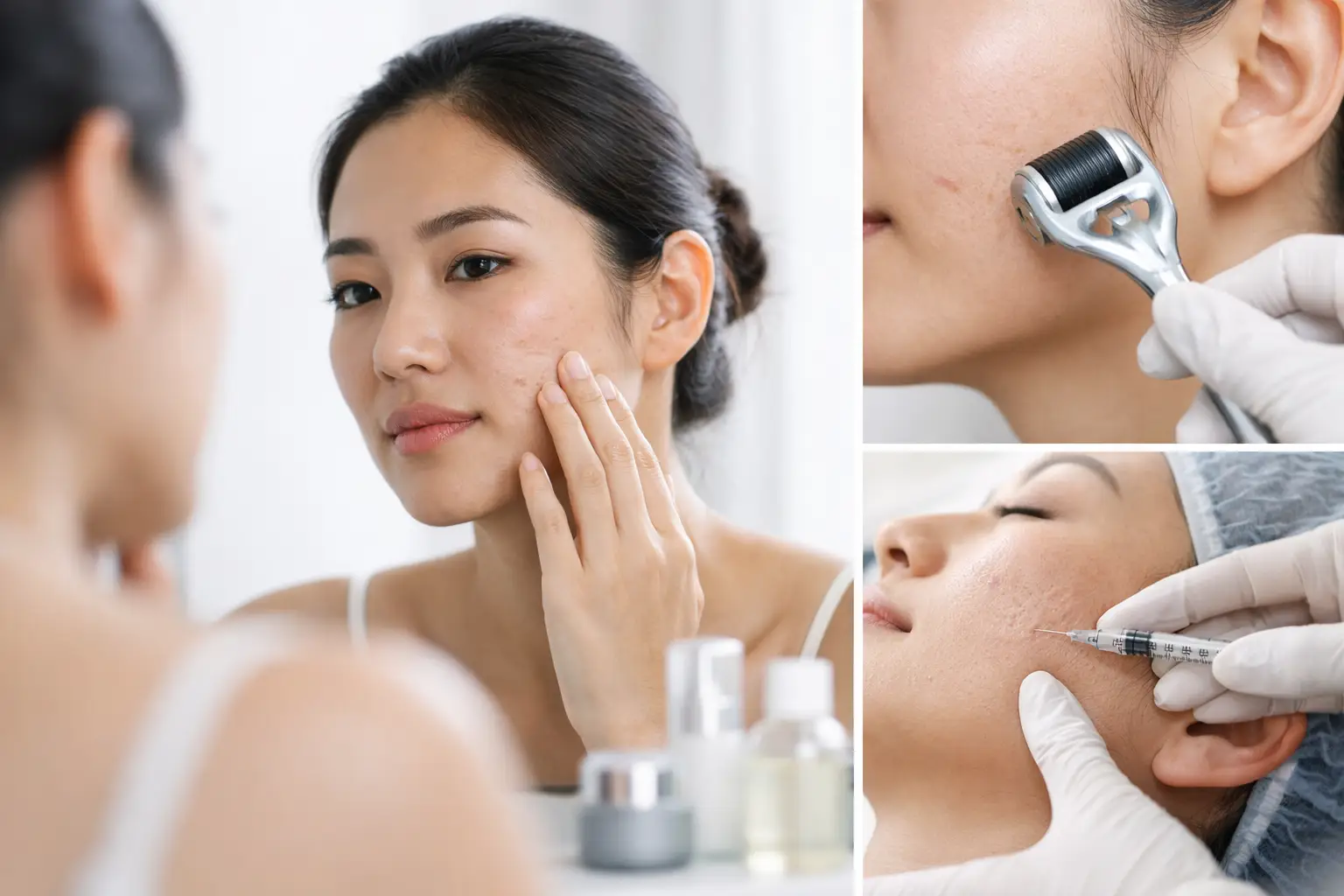
Sclerotherapy is a widely recognised approach for addressing spider veins and smaller reticular veins in the lower extremities. The procedure involves the precise injection of a specially formulated chemical solution—known as a sclerosant—directly into the targeted blood vessel using a micro-needle.
The sclerosant works by irritating the endothelial lining (the inner wall) of the vein. This induced irritation causes the walls of the vessel to swell, adhere to one another, and ultimately collapse, sealing off the blood flow. Over time, the body’s natural metabolic processes break down the collapsed vein, converting it into cellular debris that is gradually absorbed and cleared. Sclerotherapy may involve liquid sclerosants for very fine veins or foam sclerosants for slightly larger vessels, as foam has the ability to displace blood and maintain longer contact with the vein wall. Multiple treatment sessions are typically required to address extensive networks of spider veins.
Energy-Based Vascular Treatments
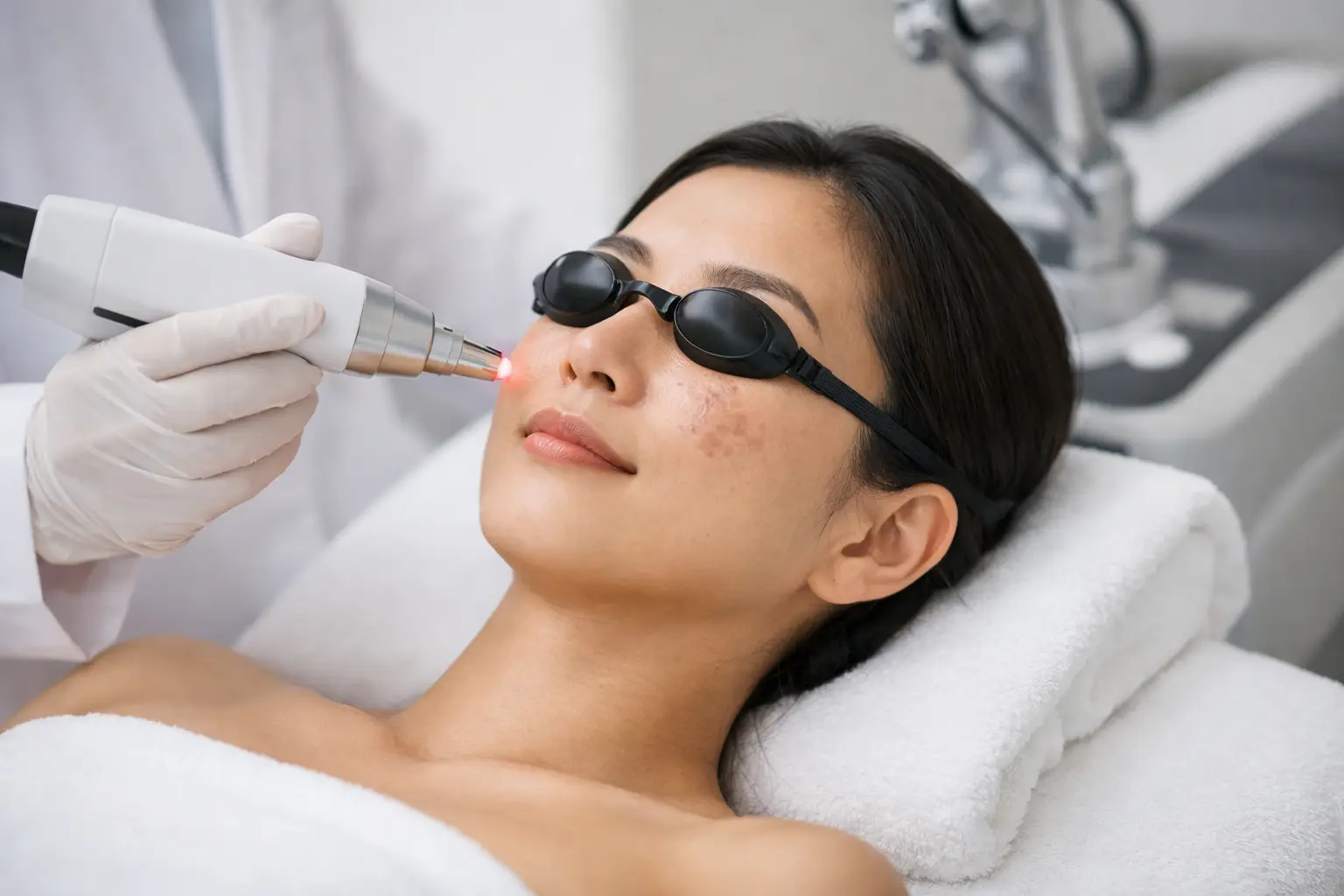
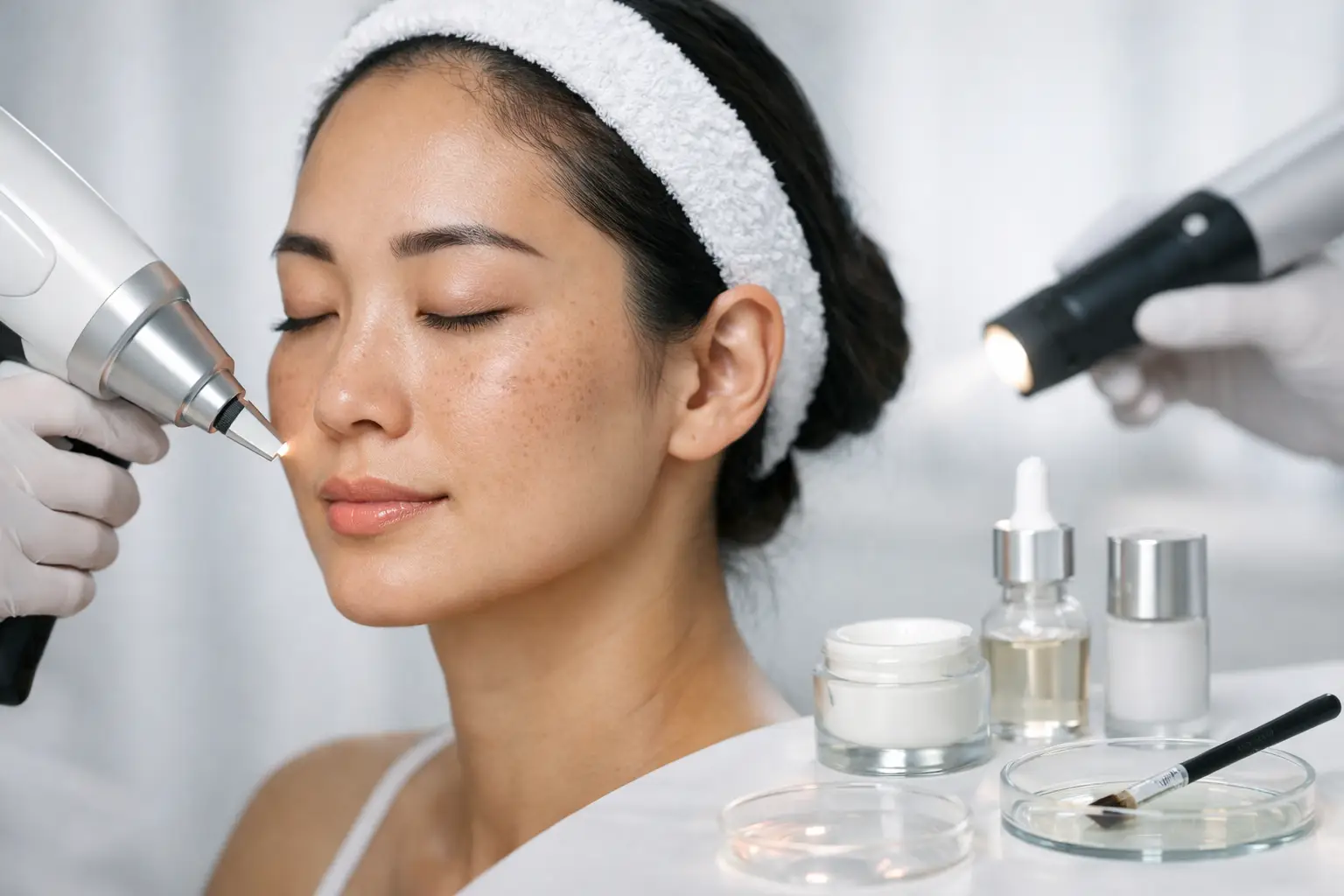
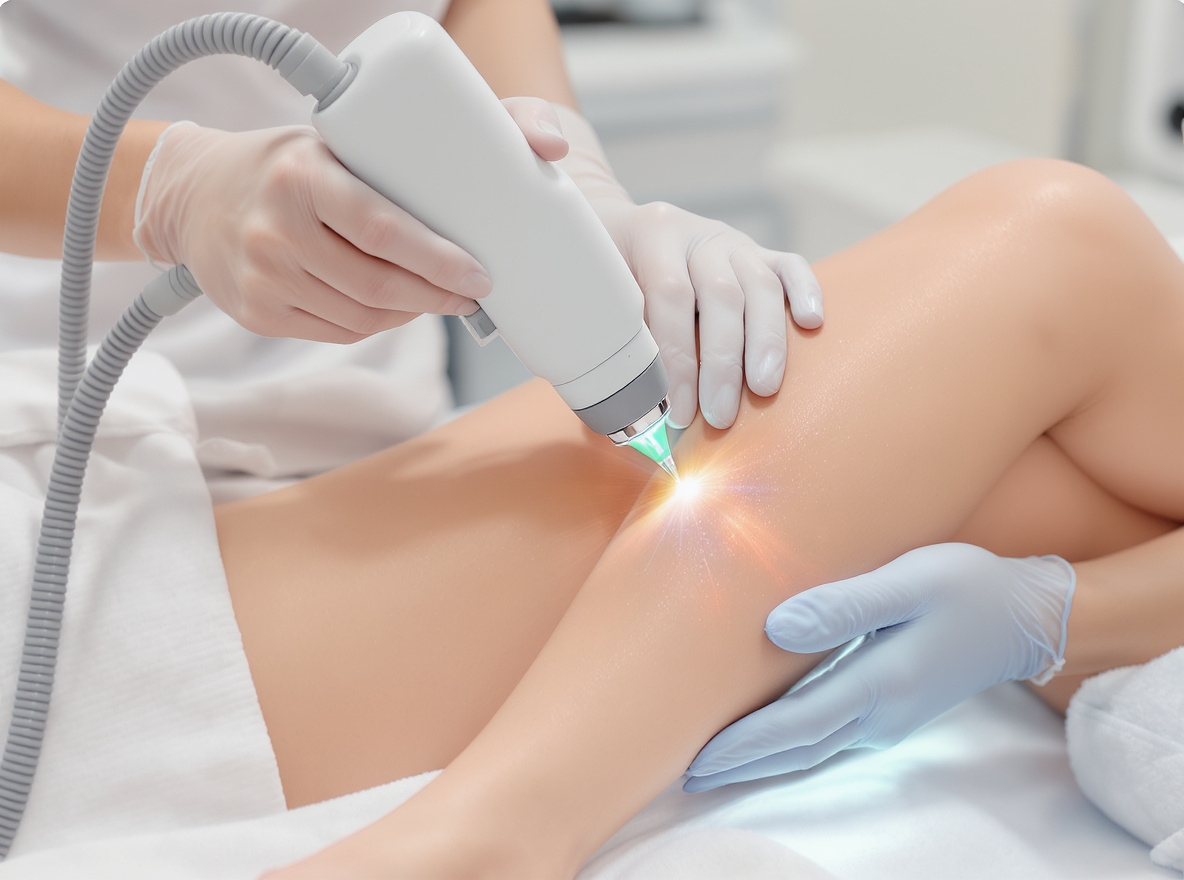
For veins that are too fine to be accessed with a needle, or for veins located on the face where injections might be less appropriate, energy-based treatments such as vascular lasers or intense pulsed light therapies may be utilized.
These modalities operate on the scientific principle of selective photothermolysis. The device emits targeted light energy at specific wavelengths that are highly absorbed by haemoglobin, the protein responsible for transporting oxygen in the blood. As the haemoglobin absorbs this light energy, it converts it into localized heat. This rapid increase in temperature coagulates the blood and damages the walls of the targeted vessel, leading to its eventual closure. Advanced energy-based devices are equipped with integrated cooling mechanisms to protect the surrounding skin and surface tissue from thermal injury during the procedure. Like sclerotherapy, energy-based treatments usually require a series of sessions to achieve the intended clinical outcome.
Combination Approaches
In clinical practice, spider veins often present in complex networks involving vessels of varying sizes and depths. Consequently, a medical professional may adopt a combination approach. For instance, deeper, slightly larger reticular veins may first be treated using sclerotherapy. Once the foundation of the venous network undergoes clinical improvement, energy-based treatments might be applied in subsequent sessions to target the remaining microscopic superficial vessels. This structured approach may help manage the visual appearance of the veins more comprehensively.
What to Expect During and After Treatment
Understanding the treatment process and adhering strictly to post-procedural care instructions are critical components of any vascular treatment plan.
The Treatment Process
Vascular treatments for spider veins are typically performed on an outpatient basis within a medical clinic. Following the initial consultation and preparation, the targeted area is cleansed. General anaesthesia is not required, though some patients may experience mild, tolerable discomfort.
During sclerotherapy, patients might feel a slight needle prick followed by a mild stinging or cramping sensation as the solution limits the vessel. During energy-based treatments, patients commonly report a snapping sensation—often likened to a rubber band flicking against the skin—coupled with a localized feeling of warmth. Treatment durations vary depending on the extent of the area being addressed, but sessions typically conclude within 30 to 45 minutes.
Post-Treatment Care and Recovery
The period following the procedure is vital to the success of the treatment and the prevention of complications. Following sclerotherapy on the legs, patients are almost uniformly instructed to wear medical-grade compression stockings. Compression applies sustained pressure to the treated vessels, ensuring that the irritated vein walls remain closed and minimizing the backflow of blood, which helps reduce localized swelling.
Practitioners generally advise patients to maintain gentle daily activities, such as moderate walking, to encourage healthy blood circulation in the deeper venous system and mitigate the risk of blood clots. Conversely, strenuous physical exercises, heavy lifting, and activities that significantly increase core body temperature (such as hot baths, saunas, or intense aerobic workouts) should be avoided for a prescribed period, usually one to two weeks. Direct and prolonged exposure to ultraviolet (UV) radiation or intense sunlight must also be avoided, particularly after energy-based treatments, to reduce the risk of post-inflammatory hyperpigmentation.
Expected Timeline for Visible Changes
It is crucial for individuals to manage their expectations regarding the timeline of outcomes. Treatments for spider veins do not produce immediate aesthetic improvements. In fact, following an intervention, the treated veins may temporarily appear darker, redder, or more prominent due to the localized inflammatory response.
The fading process is gradual. For fine spider veins, visual outcomes may begin to manifest within several weeks, while slightly larger veins may require a few months to be fully reabsorbed by the body. Because individual biological responses differ significantly, results vary widely from patient to patient, and total clearance of all visible veins is generally not an achievable clinical endpoint.
If you’re considering spider vein treatment in Singapore, you might also be interested in understanding how various skin treatments can enhance your overall appearance. For instance, the benefits of skin boosters are well-documented, and you can learn more about them in this informative article on the science behind V-shape jaw botulinum and skin boosters. This resource provides valuable insights into how these treatments can complement your spider vein therapy and improve your skin’s texture and tone. To read more, visit this article.
Potential Risks and Limitations of Treatments
| Treatment Type | Cost | Effectiveness | Recovery Time |
|---|---|---|---|
| Sclerotherapy | SGD 300 – 800 per session | Highly effective for small to medium veins | No downtime, minimal discomfort |
| Laser Therapy | SGD 500 – 1500 per session | Effective for small veins, may require multiple sessions | No downtime, minimal discomfort |
| Vein Stripping Surgery | SGD 5000 – 10000 | Highly effective for large veins | 1-4 weeks recovery time |
In accordance with medical protocols in Singapore, acknowledging the potential risks and understanding the inherent limitations of these treatments helps patients make informed decisions. No medical procedure is devoid of risks.
Common and Transient Side Effects
Expected, localized side effects are a normal part of the physiological response to vascular procedures. Patients frequently experience varying degrees of erythema (redness), localized oedema (swelling), and tenderness around the treated areas. Bruising is common, particularly with injection-based therapies, as minor amounts of blood may escape into surrounding tissues. Additionally, the skin overlying the treated vein may temporarily darken—a condition known as post-inflammatory hyperpigmentation. These side effects are typically transient and may resolve independently over days, weeks, or sometimes months, depending on an individual’s healing capacity.
Managing Potential Complications
While severe adverse events are uncommon when the procedures are performed by trained medical personnel, they can occasionally occur. A phenomenon known as neovascularisation, or “matting”, is a potential complication wherein a blush of ultra-fine, new blood vessels develops around the treated site. This may resolve on its own or necessitate further clinical intervention.
In rare instances, small skin ulcers or surface tissue necrosis can occur if a sclerosant solution escapes the vein or if thermal energy excessively impacts the skin. Allergic reactions to the sclerosant formulation are exceedingly rare but remain a documented clinical risk. Medical practitioners are trained to recognise these complications early and provide the necessary medical intervention to manage them.
Long-Term Outlook and Maintenance
A critical limitation that patients must be aware of is that while current treatments may effectively manage the appearance of existing spider veins, they do not cure the underlying genetic or structural predispositions that cause venous insufficiency. Consequently, these treatments cannot prevent new spider veins from forming in the future.
Patients are encouraged to adopt long-term management strategies, which may include wearing compression garments during long flights or extended periods of standing, managing body weight, and maintaining regular physical activity to support overall vascular health. Maintenance treatments over the years may be required for individuals who wish to continually manage the visual manifestations of the condition.
Individuals considering treatment for their spider veins should engage in a transparent, comprehensive discussion with a registered medical practitioner. A proper clinical assessment ensures that the selected intervention aligns with the patient’s medical history, current health status, and objective clinical considerations.
FAQs
What are spider veins?
Spider veins are small, damaged veins that can appear on the surface of the legs or face. They often look like a spider web or tree branches and are typically red, blue, or purple in color.
What causes spider veins?
Spider veins can be caused by a variety of factors including genetics, hormonal changes, pregnancy, obesity, prolonged standing or sitting, and sun exposure. They are more common in women and older adults.
What are the treatment options for spider veins in Singapore?
In Singapore, common treatment options for spider veins include sclerotherapy, laser therapy, and intense pulsed light (IPL) therapy. These treatments are minimally invasive and can effectively reduce the appearance of spider veins.
Are spider vein treatments in Singapore safe?
Yes, spider vein treatments in Singapore are generally safe when performed by qualified and experienced medical professionals. It is important to consult with a doctor to determine the most suitable treatment option based on individual circumstances.
What is the cost of spider vein treatment in Singapore?
The cost of spider vein treatment in Singapore can vary depending on the type of treatment, the severity of the condition, and the clinic or medical facility where the treatment is performed. It is advisable to consult with a healthcare provider to get an accurate cost estimate.