Acne is a highly prevalent dermatological condition that affects a large portion of the population at various stages of life. While active breakouts can be managed with appropriate medical or topical interventions, the aftermath of severe or chronic inflammation often manifests as structural changes to the skin, commonly referred to as acne scars. For many individuals, these textural irregularities persist long after the active acne has resolved, leading to self-consciousness and a desire for aesthetic improvement.
Within the realm of aesthetic medicine, a variety of treatment modalities have been developed to address textural scarring. Among these, energy-based skin treatments, particularly laser therapies, serve as a widely utilized approach. These procedures function on the principle of controlled tissue remodeling, aiming to encourage the skin’s natural regenerative processes. However, it is essential to approach such interventions with a comprehensive understanding of their biological mechanisms, potential risks, and limitations.
To grasp how laser treatments function, one must first understand the biological processes that lead to the formation of acne scars. Scarring is fundamentally the body’s response to dermal injury and inflammation.
The Biological Mechanism of Scarring
When an acne lesion, such as a cyst or nodule, develops, it causes a significant inflammatory response within the follicle and surrounding skin tissue. This inflammation can cause the follicular wall to rupture. If the rupture occurs near the skin’s surface, the lesion usually heals relatively quickly. However, a deep break in the follicular wall spills infected material and inflammatory cells into the deeper dermis, destroying healthy skin tissue. The body attempts to repair this damage by forming new collagen fibers. If the healing process produces too little or too much collagen, a visible scar remains.
Atrophic Scar Delineation
The majority of acne scars are atrophic, meaning they present as depressions or indentations in the skin due to a net loss of underlying collagen and tissue. Atrophic scars are generally categorized into three primary morphological types. “Ice pick” scars are narrow, deep, V-shaped tracts that extend into the dermis, often resembling enlarged pores. “Boxcar” scars are broader depressions with sharply defined, steep edges, which can vary in depth. “Rolling” scars feature broad, undulating depressions caused by fibrous bands tethering the epidermis to deeper subcutaneous structures, giving the skin an uneven texture. The morphology of the scar often dictates the specific therapeutic approach required.
Hypertrophic and Keloidal Scars
In contrast to atrophic scarring, some individuals develop hypertrophic or keloidal scars. These occur when the body overproduces collagen during the healing cascade, resulting in firm, raised masses of tissue on the skin’s surface. Hypertrophic scars generally remain within the boundaries of the original lesion, whereas keloidal scars expand beyond the initial site of inflammation. Laser therapies are primarily and most commonly utilized for managing atrophic scarring, though specific specialized lasers may sometimes be part of a broader protocol for raised scars.
Acne scars can be a persistent reminder of past breakouts, but advancements in laser treatments offer promising solutions for those looking to restore their skin’s appearance. For a deeper understanding of how personalized laser treatments can effectively address skin concerns, including pigmentation issues that often accompany acne scars, you can read more in this insightful article: Struggling with Pigmentation: Why Personalised Laser Treatments Work. This resource highlights the benefits of tailored approaches to laser therapy, ensuring optimal results for various skin types and conditions.
The Science Behind Acne Scar Laser Treatments
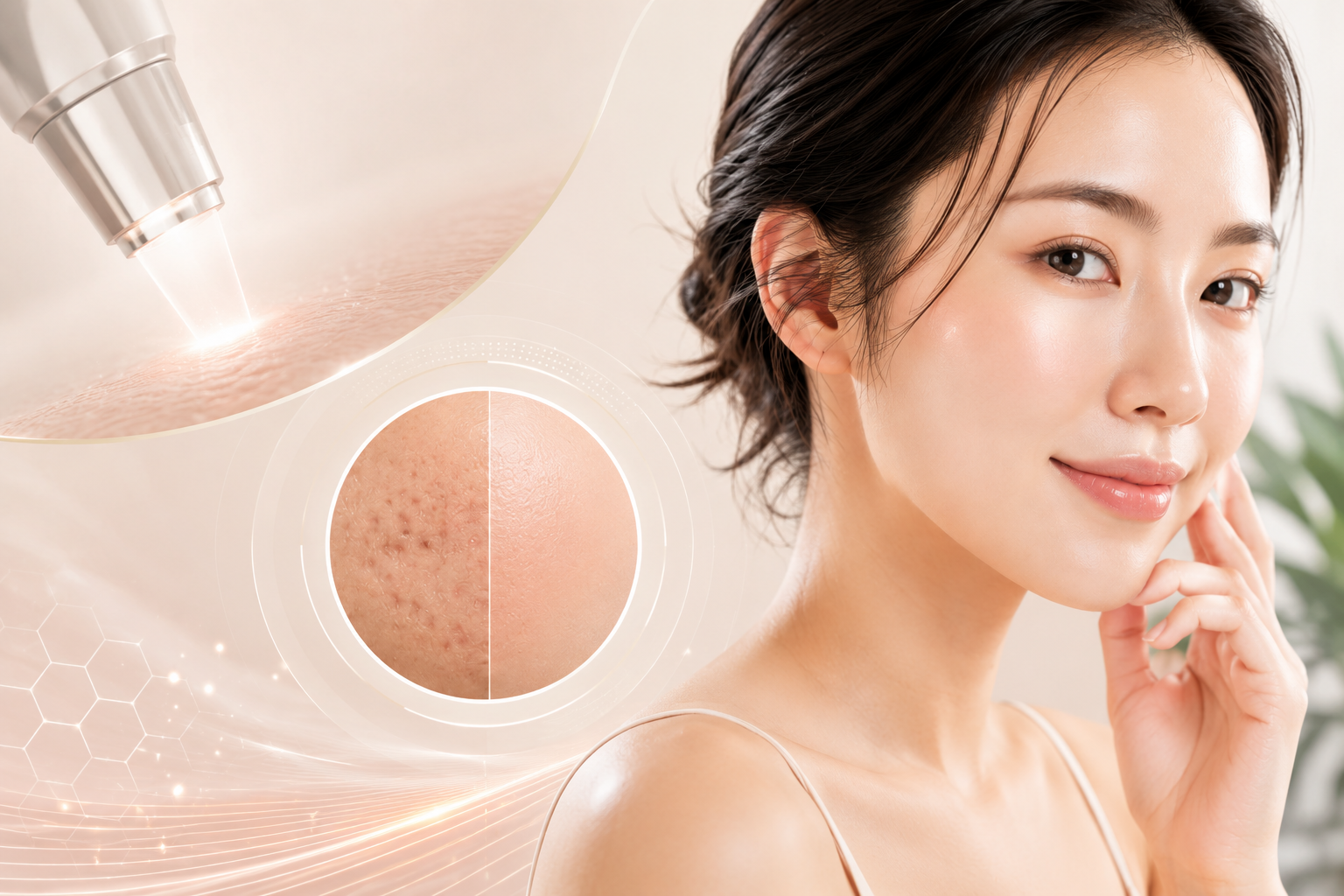
Laser technology designed for scar management operates on the fundamental principle of utilizing focused light energy to interact with targeted layers of the skin. The objective is to initiate a controlled wound-healing response that may help improve the appearance of structural irregularities.
Principle of Controlled Thermal Injury
The overarching concept of energy-based skin treatments for scarring relies on inducing micro-thermal injuries in the dermis. When specific wavelengths of light are applied, the energy is absorbed by targeted chromophores (such as water within the skin). This absorption generates heat, which creates a precise zone of coagulation or ablation. In response to this controlled thermal injury, the body’s innate immune system begins to clear the damaged tissue. Concurrently, fibroblasts—the cells responsible for producing structural proteins—are stimulated. This process, known as neocollagenesis, encourages the gradual synthesis of new collagen and elastin fibers, which may help to elevate depressed scars over time.
Ablative Laser Modalities
Laser devices are broadly categorized by how they interact with the uppermost layer of the skin, the epidermis. Ablative lasers work by vaporizing the outermost layers of the skin while simultaneously heating the underlying dermis. By removing the epidermal layer, these devices address surface irregularities and strongly stimulate dermal remodeling. Due to their intensive nature, ablative laser treatments usually require a more substantial recovery period and carry a distinct set of post-procedural care requirements.
Non-Ablative Laser Modalities
Conversely, non-ablative lasers are designed to deliver targeted thermal energy to the deeper dermal layers without vaporizing or removing the overlying epidermis. By leaving the surface barrier intact, these treatments typically present a lower risk profile for certain side effects and demand less downtime. However, because they are less intensive than their ablative counterparts, non-ablative approaches often require a more extended series of sessions to achieve the desired clinical outcome.
Fractional Laser Delivery Systems
Modern aesthetic medicine frequently utilizes fractional laser technology, which can be applied to both ablative and non-ablative modalities. Instead of treating a solid, uniform area of tissue, fractional lasers break the energy beam into thousands of microscopic columns. These columns create micro-thermal treatment zones, leaving the surrounding untreated tissue fully intact. The preserved tissue bridges act as reservoirs of healthy cells, which significantly accelerates the epidermal healing process and mitigates the risk of extensive complications, while still delivering energy deep enough to stimulate neocollagenesis.
The Clinical Treatment Process
Undergoing an acne scar laser treatment is a multi-step clinical process that prioritizes patient safety and procedural efficacy. A structured approach ensures that the chosen intervention aligns with the individual’s physiological indications.
Thorough Medical Assessment
The process must always begin with a detailed consultation with a qualified medical practitioner. During this assessment, the practitioner evaluates the patient’s medical history, assesses the current state of skin health, and determines the specific types of acne scars present. It is crucial to determine an individual’s skin phototype (using the Fitzpatrick scale), as individuals with darker skin tones possess more active melanocytes and may require highly specific laser parameters to avoid pigmentation complications. Additionally, the practitioner will verify that any active acne is fully controlled, as treating inflamed skin with lasers can exacerbate breakouts and hinder the healing process.
Preparation and the Procedure
If an individual is deemed a suitable candidate, specific pre-procedural guidelines are provided, which may include the temporary cessation of certain active topical ingredients or medications. On the day of the procedure, a topical anesthetic cream is typically applied to the targeted area to enhance patient comfort, as laser-induced thermal effects can cause discomfort. Eye protection is mandatory. As the practitioner systematically guides the laser handpiece over the specified areas, patients generally experience varying degrees of warmth or a prickling sensation, depending on the energy settings and the specific modality utilized.
Immediate Post-Treatment Care
Following the procedure, the skin is in an acute state of thermal recovery. Cooling agents or soothing post-procedure formulations may be applied to temporarily alleviate the sensation of heat. The medical team will provide explicit aftercare instructions, which typically mandate using a mild, non-exfoliating cleanser and copious amounts of barrier-repairing moisturizers. Strict adherence to broad-spectrum ultraviolet (UV) protection is critical, especially in environments with high year-round UV indexes like Singapore, to protect the compromised epidermal barrier and limit the risk of pigmentary alterations.
Managing Expectations and Understanding Timelines
One of the most critical aspects of exploring energy-based skin treatments is establishing a realistic understanding of what to expect regarding outcomes and timelines. Clear communication between the patient and the practitioner is essential to avoid misconceptions.
Gradual Biologic Remodeling
It is imperative to understand that laser scar treatments do not yield instantaneous results. The biological process of tissue remodeling and neocollagenesis is inherently gradual. While some superficial changes may be noted soon after the initial post-treatment swelling subsides, the structural synthesis of new, mature collagen generally unfolds over a period of three to six months. Patients should anticipate a progressive, subtle evolution in their skin’s texture rather than immediate structural transformation.
Variability in Individual Responses
Results vary significantly between individuals. The degree of improvement a patient may experience depends heavily on a multitude of intrinsic and extrinsic factors. These include the depth, morphology, and age of the scars, the patient’s age and natural cellular turnover rate, genetic predispositions toward collagen production, and adherence to post-care protocols. In aesthetic medicine, absolute claims of entirely erasing or removing deep scarring are scientifically inaccurate; the objective is typically the amelioration and softening of the scar borders to reduce their visual prominence.
Multimodal Approaches to Scar Management
Recognizing that acne scars are often multifaceted in their structural composition, medical practitioners frequently suggest a multimodal treatment plan. While specific laser wavelengths and technologies may form a core component, they are often integrated with complementary procedures such as subcision (which manually severs fibrous bands beneath rolling scars), targeted chemical peels, or collagen-stimulating treatments. A tailored strategy that leverages multiple modalities is often necessary to address the varying components of complex dermal scarring comprehensively.
Acne scar laser treatment has gained popularity as an effective solution for those looking to improve their skin’s appearance. However, it’s essential to be aware of common pitfalls that can hinder the results of such treatments. For more insights on this topic, you might find it helpful to read about the mistakes to avoid when treating pigmentation in Singapore, which can also relate to achieving optimal outcomes with laser treatments. You can check out the article here for valuable tips and advice.
Potential Risks, Side Effects, and Suitability
| Treatment Type | Cost | Recovery Time | Effectiveness |
|---|---|---|---|
| CO2 Laser | 800 – 3,000 per session | 7-10 days | Highly effective |
| Erbium YAG Laser | 1,000 – 2,500 per session | 5-7 days | Effective for mild to moderate scars |
| Fraxel Laser | 750 – 1,500 per session | 3-5 days | Effective for mild scars |
As with any medical intervention involving tissue alteration, laser treatments for acne scars are accompanied by expected downtime and a spectrum of potential risks. Thorough comprehension of these factors allows patients to make informed decisions regarding their care.
Anticipated Post-Procedural Recovery
Following laser application, predictable and transient biological responses occur. The most common immediate effect is erythema, a pronounced redness comparable to a moderate sunburn. Edema, or localized swelling, is also standard as the dermal tissue reacts to the thermal energy. Depending on whether an ablative or non-ablative approach was utilized, the skin may subsequently develop microscopic crusts or scabs within a few days. These crusts must be allowed to slough off naturally to prevent secondary scarring. The duration of this restorative phase can range from a few days to over a week, entirely dependent on the intensity of the treatment parameters.
Recognizing Potential Complications
While advancements in fractional technology have refined the safety profile of these procedures, inherent risks remain. If the skin is inadvertently compromised or post-care hygiene is not strictly maintained, bacterial or viral infections can manifest. In rare instances, particularly if the thermal injury exceeds the skin’s healing capacity or if crusts are prematurely removed by the patient, idiosyncratic scarring can occur, thereby compounding the initial concern. An ongoing line of communication with the clinic is necessary to promptly address any unusual or prolonged symptoms.
The Risk of Post-Inflammatory Hyperpigmentation
A primary concern particularly relevant to populations with naturally higher melanin content—common in Southeast Asian demographics—is the risk of post-inflammatory hyperpigmentation (PIH). PIH presents as a darkening of the treated areas due to an overproduction of melanin triggered by the inflammatory healing response. To manage this risk, practitioners meticulously calibrate laser wavelengths and pulse durations to optimize thermal delivery while avoiding excess collateral heat. Furthermore, the mandatory implementation of a rigorous sun avoidance and sun protection regimen post-treatment cannot be overstated in minimizing the likelihood of persistent PIH.
Evaluating Patient Suitability
Not all individuals presenting with acne scars are immediately suitable candidates for laser therapies. Absolute and relative contraindications exist. Individuals with a history of abnormal wound healing, active systemic infections, specific autoimmune conditions targeting connective tissue, or those who have recently used systemic retinoids for acne management within a specific timeframe generally require careful deferral or alternate pathways. Furthermore, pregnant or breastfeeding individuals are typically advised to postpone elective aesthetic treatments out of an abundance of clinical caution.
In summary, energy-based skin treatments represent a scientifically grounded option that may help improve the textural irregularities associated with acne scarring. By inducing controlled dermal remodeling, these technologies harness the body’s innate regenerative capacities to synthesize new collagen. However, clinical outcomes are not guaranteed, and the trajectory of improvement varies widely among individuals. A thorough consultation with a qualified medical professional is essential to map out an evidence-based, highly individualized protocol that considers aesthetic goals, risk tolerance, and individual physiological parameters.
FAQs
What is acne scar laser treatment?
Acne scar laser treatment is a procedure that uses focused light therapy to help improve the appearance of acne scars on the skin. The laser targets the damaged skin cells and stimulates the production of new collagen, which can help to smooth out the skin’s texture and reduce the appearance of scars.
How does acne scar laser treatment work?
During the procedure, a dermatologist or trained professional will use a laser device to deliver targeted pulses of light to the affected areas of the skin. The light energy is absorbed by the skin, stimulating the production of new collagen and promoting the growth of healthy skin cells. Over time, this can help to improve the texture and appearance of acne scars.
What are the benefits of acne scar laser treatment?
Acne scar laser treatment can help to reduce the appearance of acne scars, improve skin texture, and promote overall skin rejuvenation. It is a non-invasive procedure with minimal downtime, making it a popular option for individuals looking to improve the appearance of their skin without undergoing surgery.
Are there any risks or side effects associated with acne scar laser treatment?
While acne scar laser treatment is generally considered safe, there are some potential risks and side effects to be aware of. These may include temporary redness, swelling, or discomfort at the treatment site. In rare cases, there is a risk of scarring, infection, or changes in skin pigmentation. It is important to discuss these potential risks with a qualified healthcare professional before undergoing treatment.
How many sessions of acne scar laser treatment are typically needed to see results?
The number of sessions needed for acne scar laser treatment can vary depending on the severity of the scarring and the specific type of laser used. In general, multiple sessions are usually required to achieve optimal results. Most individuals will undergo a series of treatments spaced several weeks apart to allow the skin to heal and for the full effects of the treatment to become apparent.